When a relationship gets serious the prospect of meeting folk who look likely to be future in-laws can be quite a milestone and immensely daunting.
My first ever introduction to and meeting with my wife to be Allison's mother, Maureen was quite unusual.
She was crossing a deep trench on a plank at the back of her house.
It has always been a favourite double-entendre in the family that the first thing that Allison showed me on visiting her parents' home was her Father, George's ,back passage. It was a narrow, dark brick vaulted arrangement with long wooden ladders tidily stowed above head height behind secure outer and inner timber doors . What amazed me even more was that it was shared with the immediate neighbours with a reasonable right of way and use through it. That just about exhausts that line of humour.
As Allison led me into the walled yard beyond the passage I was faced with that deep trench. Being nervous I speculated to myself that it was perhaps one of a number of things;
1) An obstacle course to assess if I was good material for a son-in-law. A Brown family Krypton Factor.
2) An open grave as Maureen and George were very protective about their daughter.
3) A precaution against flooding in the pre-tidal barrier days
4) A Moat
As I approached the excavations Maureen came out from the back door and deftly negotiated a series of plank bridges over the trench to greet me. In a complete invasion of personal space and etiquette, for a first meeting, she grabbed me firmly by both cheeks (facial) pinching a good deal of puppy fat jowl between thumb and index finger. I cannot recall if she gave me a kiss because the constriction on my breathing from that particular style of welcome was making me feel a bit dizzy and I could have been a million miles away. I feared that this was the first stage of getting me into that large hole in the ground.
As my facial muscles regained their handsome, youthful composure Maureen looked at Allison and exclaimed that I looked just like Howard Keel. For a brief moment I had a picture in my mind's eye of the giant steel toothed assassin out of the Bond movies and felt that was a bit rude to draw attention to matters of an unfortunate bodily nature so early in the proceedings. I was thinking about the wrong Keel. The resemblance was because I was wearing a checked lumberjack shirt like Howard Keel, he of the male cast of 'Seven Brides for Seven Brothers' which it turned out was one of the best known performances of that particular American actor and singer. I was a bit disappointed as I fancied myself as having a resemblance to Robin Williams or Harry Enfield. Thank goodness, Maureen was talking about my clothes rather than my physical attributes as in that particular year Mr Keel was approaching 70 years old.
I think that we were both pretty nervous at the first meeting but we did hit it off immediately as though we had known each other for many years. Maureen explained that the trench was part of the foundations for her new kitchen and bathroom extension which I found reassuring, after my initial mental wanderings ,and could relax.
Within a couple of minutes I had been assimilated into the family marking the ceremony with a lovely cup of tea, the very first one in a series of, to date, many thousands. I had also experienced my very first moment of genuine warmth and unconditional love from Maureen that is very much a part of her whole being and is so cherished by those who are privileged to know her.
(Presented today on our 31st Wedding Anniversary. Where did the tine go?)
Wednesday, 8 April 2020


Monday, 6 April 2020
The Life and Times of Joe Walsh
This played on the radio the other day.I'd forgotten what a classic track it is,
from that great riff through to the Walsh lyrics which he said were based on
true events in his own life.
from that great riff through to the Walsh lyrics which he said were based on
true events in his own life.
I have a mansion but forget the price
Ain't never been there, they tell me it's nice
I live in hotels, tear out the walls
I have accountants, pay for it all
They say I'm crazy but I have a have a good time
I'm just looking for clues at the scene of the crime
Life's been good to me so far
My Maserati does one-eighty-five
I lost my license, now I don't drive
I have a limo, ride in the back
I lock the doors in case I'm attacked
I'm making records, my fans they can't wait
They write me letters, tell me I'm great
So I got me an office, gold records on the wall
Just leave a message, maybe I'll call
Lucky I'm sane after all I've been through
(Everybody say I'm cool, he's cool)
I can't complain but sometimes I still do
Life's been good to me so far
....................................................
....................................................
(long instrumental break here- plenty enough time to put the kettle on)
....................................................
....................................................
I go to parties sometimes until four
It's hard to leave when you can't find the door
It's tough to handle this fortune and fame
Everybody's so different, I haven't changed
They say I'm lazy but it takes all my time
(Everybody say oh yeah, oh yeah)
I keep on goin' guess I'll never know why
Life's been good to me so far
(yeah, yeah, yeah)
More instrumental stuff to the end
Sunday, 5 April 2020
That Seaside Trip
Today is the third anniversary of the following event............................................................
The 5th April 2017 started off as a normal wednesday in my working week as a Surveyor.
My diary had only three entries covering the hours 10.30am to 3pm although having carried out my usual pre-inspection research I knew that the jobs were challenging enough and would give very little by way of respite in between the efforts of concentration called upon when advising a prospective buyer of a house on its condition.
First up was a property that I sensed could be a problem.
It was of a modern split level design fairly typical of an individual build of the early 1980's but as though the architect was not really sure if his clients wanted a house or a bungalow and so provided both.
The location, just off the centre of a genteel East Coast Town had some great advantages with shops, promenade and seaside attractions just a short walk away. It would equally suit as a home for retirement or a young family.
Scouring old maps in my office in the lead up to the survey had indicated a few unique features about the site on which it was built.
Until the 1960's the land had been a railway marshalling or shunting yard until the Beeching Proposals of that decade saw the passenger route from the town to the regional City of Hull discontinued. The eastern end which provided the access to the road had distinct graduated lines on the Ordnance Survey map denoting steepness of slope. The old rail yard had evidently terminated at the foot of this incline.
As with many bits of land coming out of Railway Board ownership there will have been a few technical difficulties to overcome to permit development for a house.
The Estate Agents brochure, on line, illustrated how these had been tackled with photos suggesting large scale excavation of the heavy clay soils in that the house sat at the bottom of a hole with cliff-like retaining walls on two sides and a rear garden banked up sharply.
There did not appear to be any level external surfaces at all.
Mentally I revised my opinion as to suitability for the retirement sector to specifically the very active and able bodied retirement sector.
It was a glorious morning when I arrived to do my job.
The gated entrance to the house/bungalow could easily be missed as it constituted the only frontage to the road. On first passing in the car the steep drive appeared daunting and I could not see any parking or turning area in front of the house. I left my car just down the road.
Perfectly balanced with ladders and surveying equipment, a skill derived from 30 years of practice, I made my way down the driveway.
It was a mixture of grass track and banana shaped cast concrete strips. On even this brightest of days I felt a gradual darkening as I made my way between the deep side cutting walls.
The owners greeted me , having seen my tentative approach from a first floor or was it upper ground floor window.
We chatted in order to establish a few basic facts although many provided by the owners tallied with my own research. They offered to follow me around but I said that I needed to be outside for about half an hour and would knock on the door when ready to come inside. They clambered up a series of steps and disappeared. I set about my work noting a few features of the building.
Being at the lowest point of the site I may have relaxed slightly in my initial reservations about the aspects of the gradient and mixed surfaces.
As I took a single step towards the concrete apron in front of the integral garage my right leg slid away on a loose aggregate filler just on the edge.
My whole body weight shifted in an attempt to regain balance bearing down on the doubled under limb. Something went snap and a searing pain shot through my physical frame as I fell heavily to the ground.
The ominous sound was not distinguishable as whether from bone, tendon or muscle at first but I felt relieved to be able to wiggle my toes in my shoes. At least it did not appear to be a fracture.
My first thought was one of irony as I had just ordered a new road bike and knew instinctively that it would have to remain in the shipping box in my garage for some time now.
After that bit of dark humour came rationality about my situation.
I was certainly immobilised and sat in a hole. The split level design of the house meant that I was out of any line of sight of the windows and the owners will not have witnessed my accident. At least I was at an occupied place and with a phone signal which is not always the case in my work.
They sounded surprised to receive my phone call for help but were quick to come out and find me sat up against the stone steps.
I remained lucid but whilst his wife arranged for an ambulance the man from the house kept me talking and alert, no doubt based on his experiences in dealing with trauma situations over more than forty years in the armed forces.
The Paramedics found the terrain difficult for reversing in their vehicle and moving me about on a stretcher but I was soon en route to the City Infirmary.
A couple of days ago my right leg quadricep tendon was operated on in an attempt to re-attach it to my knee. I will spare the details although my family did watch a similar operation on You Tube and said it was fascinating.
I have a long recovery period ahead involving no load bearing for the next six to eight weeks followed by, well, we shall have to wait and see.
In the enforced lay off I have great plans for reading, writing and catching up on all of the things that a previously heavy workload so often thwarted.
Postscript; it has been a long and difficult recovery and even now, some 36 months further on, I still feel a bit of stiffness in my upper right leg particularly on colder days. I am blessed that I can work normally, walk easily, cycle and above all am no more of a burden on my loved ones than I usually am.
The 5th April 2017 started off as a normal wednesday in my working week as a Surveyor.
My diary had only three entries covering the hours 10.30am to 3pm although having carried out my usual pre-inspection research I knew that the jobs were challenging enough and would give very little by way of respite in between the efforts of concentration called upon when advising a prospective buyer of a house on its condition.
First up was a property that I sensed could be a problem.
It was of a modern split level design fairly typical of an individual build of the early 1980's but as though the architect was not really sure if his clients wanted a house or a bungalow and so provided both.
The location, just off the centre of a genteel East Coast Town had some great advantages with shops, promenade and seaside attractions just a short walk away. It would equally suit as a home for retirement or a young family.
Scouring old maps in my office in the lead up to the survey had indicated a few unique features about the site on which it was built.
Until the 1960's the land had been a railway marshalling or shunting yard until the Beeching Proposals of that decade saw the passenger route from the town to the regional City of Hull discontinued. The eastern end which provided the access to the road had distinct graduated lines on the Ordnance Survey map denoting steepness of slope. The old rail yard had evidently terminated at the foot of this incline.
As with many bits of land coming out of Railway Board ownership there will have been a few technical difficulties to overcome to permit development for a house.
The Estate Agents brochure, on line, illustrated how these had been tackled with photos suggesting large scale excavation of the heavy clay soils in that the house sat at the bottom of a hole with cliff-like retaining walls on two sides and a rear garden banked up sharply.
There did not appear to be any level external surfaces at all.
Mentally I revised my opinion as to suitability for the retirement sector to specifically the very active and able bodied retirement sector.
It was a glorious morning when I arrived to do my job.
The gated entrance to the house/bungalow could easily be missed as it constituted the only frontage to the road. On first passing in the car the steep drive appeared daunting and I could not see any parking or turning area in front of the house. I left my car just down the road.
Perfectly balanced with ladders and surveying equipment, a skill derived from 30 years of practice, I made my way down the driveway.
It was a mixture of grass track and banana shaped cast concrete strips. On even this brightest of days I felt a gradual darkening as I made my way between the deep side cutting walls.
The owners greeted me , having seen my tentative approach from a first floor or was it upper ground floor window.
We chatted in order to establish a few basic facts although many provided by the owners tallied with my own research. They offered to follow me around but I said that I needed to be outside for about half an hour and would knock on the door when ready to come inside. They clambered up a series of steps and disappeared. I set about my work noting a few features of the building.
Being at the lowest point of the site I may have relaxed slightly in my initial reservations about the aspects of the gradient and mixed surfaces.
As I took a single step towards the concrete apron in front of the integral garage my right leg slid away on a loose aggregate filler just on the edge.
My whole body weight shifted in an attempt to regain balance bearing down on the doubled under limb. Something went snap and a searing pain shot through my physical frame as I fell heavily to the ground.
The ominous sound was not distinguishable as whether from bone, tendon or muscle at first but I felt relieved to be able to wiggle my toes in my shoes. At least it did not appear to be a fracture.
My first thought was one of irony as I had just ordered a new road bike and knew instinctively that it would have to remain in the shipping box in my garage for some time now.
After that bit of dark humour came rationality about my situation.
I was certainly immobilised and sat in a hole. The split level design of the house meant that I was out of any line of sight of the windows and the owners will not have witnessed my accident. At least I was at an occupied place and with a phone signal which is not always the case in my work.
They sounded surprised to receive my phone call for help but were quick to come out and find me sat up against the stone steps.
I remained lucid but whilst his wife arranged for an ambulance the man from the house kept me talking and alert, no doubt based on his experiences in dealing with trauma situations over more than forty years in the armed forces.
The Paramedics found the terrain difficult for reversing in their vehicle and moving me about on a stretcher but I was soon en route to the City Infirmary.
A couple of days ago my right leg quadricep tendon was operated on in an attempt to re-attach it to my knee. I will spare the details although my family did watch a similar operation on You Tube and said it was fascinating.
I have a long recovery period ahead involving no load bearing for the next six to eight weeks followed by, well, we shall have to wait and see.
In the enforced lay off I have great plans for reading, writing and catching up on all of the things that a previously heavy workload so often thwarted.
Postscript; it has been a long and difficult recovery and even now, some 36 months further on, I still feel a bit of stiffness in my upper right leg particularly on colder days. I am blessed that I can work normally, walk easily, cycle and above all am no more of a burden on my loved ones than I usually am.
Saturday, 4 April 2020
Making a bit of a Racquet
As part of the commitment of our household to comply with the UK Government Guidance on staying at home and therefore helping to control the spread of the Covid-19 Virus we are now in possession of...................... well, see if you can guess from the following Extract from the United States Patent Office.
"A flexible line is secured to a rounded anchoring element located inside a hollow ball, e.g., a tennis ball.
The rounded anchoring element bears against an elongated curved base member which bears against the inside surface of the ball and conforms to the curvature thereof. The curved base member includes an integral raised portion which extends into an opening in the ball.
The flexible line is knotted after being passed through the raised portion, base member and anchoring element. The width of the curved base member is substantially equal to the diameter of the opening in the ball.
In a preferred form of the invention, the hook is slideable on a spiral formation located on top of a pole.
The game is played by two persons and the object is for one player to hit the ball with a racquet so that the hook moves up the spiral and off, while the other player tries, also with a racquet, to prevent this"
Yep, it's Swingball
The item originated in 1967 having been the invention of a guy in South Africa called Mr Gormley.
It achieved a Worldwide Application back in 1970 and was launched into the UK in 1973.
Although a simple principal the classic version was received enthusiastically in this country and has, over the last 50 years become the best selling garden/outdoor toy.
When I was growing up our family had one that was without fail the first thing to be packed into the estate car for the annual camping and caravanning holiday. It certainly got a lot of very competitive use amongst us siblings. There was no better way to get rid of all of that frustration and adolescent aggression than smashing the tethered ball about with no concerns that it would fly off and get lost in the rough.

These early versions were pretty hefty in terms of materials and manufacturing and able to cope with being hammered into all sorts of ground conditions from camp site to beach.
It is not surprising that, in our travels, just about every family seemed to have bought one as well.
In the first 40 years of Swingball production around 10 million were purchased.
Our recent acquisition, as part of our stay at home activities is quite plasticky and I do not have high hopes for it lasting beyond the current crisis conditions. Rather than a stout metal spike for a pole the latest version requires its hollow base to be filled with sand or soil. I suppose that is down to the fact that most residential gardens are now paved over rather than of traditional lawn.
Although the style and quality may have changed in response to manufacturing costs and processes as soon as you strike the ball with the perforated plastic racquet you are reassured that it is, at heart, still the same old Swingball and promises endless hours of fun and games.
"A flexible line is secured to a rounded anchoring element located inside a hollow ball, e.g., a tennis ball.
The rounded anchoring element bears against an elongated curved base member which bears against the inside surface of the ball and conforms to the curvature thereof. The curved base member includes an integral raised portion which extends into an opening in the ball.
The flexible line is knotted after being passed through the raised portion, base member and anchoring element. The width of the curved base member is substantially equal to the diameter of the opening in the ball.
In a preferred form of the invention, the hook is slideable on a spiral formation located on top of a pole.
The game is played by two persons and the object is for one player to hit the ball with a racquet so that the hook moves up the spiral and off, while the other player tries, also with a racquet, to prevent this"
Yep, it's Swingball
The item originated in 1967 having been the invention of a guy in South Africa called Mr Gormley.
It achieved a Worldwide Application back in 1970 and was launched into the UK in 1973.
Although a simple principal the classic version was received enthusiastically in this country and has, over the last 50 years become the best selling garden/outdoor toy.
When I was growing up our family had one that was without fail the first thing to be packed into the estate car for the annual camping and caravanning holiday. It certainly got a lot of very competitive use amongst us siblings. There was no better way to get rid of all of that frustration and adolescent aggression than smashing the tethered ball about with no concerns that it would fly off and get lost in the rough.

These early versions were pretty hefty in terms of materials and manufacturing and able to cope with being hammered into all sorts of ground conditions from camp site to beach.
It is not surprising that, in our travels, just about every family seemed to have bought one as well.
In the first 40 years of Swingball production around 10 million were purchased.
Our recent acquisition, as part of our stay at home activities is quite plasticky and I do not have high hopes for it lasting beyond the current crisis conditions. Rather than a stout metal spike for a pole the latest version requires its hollow base to be filled with sand or soil. I suppose that is down to the fact that most residential gardens are now paved over rather than of traditional lawn.
Although the style and quality may have changed in response to manufacturing costs and processes as soon as you strike the ball with the perforated plastic racquet you are reassured that it is, at heart, still the same old Swingball and promises endless hours of fun and games.
Friday, 3 April 2020
Looking Up
We all ran out of the house to observe the International Space Station as it hurtled over our heads at 17,500 miles per hour and some 253 miles up.

Even at this altitude and under some distortion from the atmosphere it was possible to make out the almost insect-like profile made so distinctive by the massive array of solar panels on its extremities.
The solar reflection was quite pronounced, no doubt accentuated by the lower levels of pollution which are a rare, good consequence of the otherwise devastating health emergency that we are all now very much involved with.
At such times of peril on the surface of planet Earth you would perhaps look a bit enviously at the ultimate means to achieve isolation and the lowest possible risk of exposure to the pathogens of the Covid-19 virus.
That rather base emotion did not even cross my mind at the sight of the ISS.
I did have some empathy with distant ancestors upon witnessing this type of celestial event although I possessed the advantage of prior knowledge of it taking place and had no cause for fear, distress or pit of the stomach sheer horror that will have accompanied a solar eclipse, the passing of a comet or the plummeting to the ground of a fiery meteorite in those times past. We have progressed in intelligence and understanding but I could still sense a deep rooted genetic compulsion to bury the family silver in a deep hole in the middle of a farmers field.
As those who read my blog regularly know I am a bit of a fan of Space and all things astronauty. This started with the first Lunar Landing in 1969 which I think I watched, age 6, on our grainy black and white television followed by other Apollo and Soyuz missions featured in my teenage magazines. The Skylab mission in 1973 was an exciting development as a forerunner of Humans living for prolonged periods in Earth Orbit. The Space Shuttle programme had equal fascination for me but tempered by the two tragic accidents.
A couple of years ago I took part in the Crowd Funding to preserve for future generations the Spacesuit of Neil Armstrong and , as they say, the folks at The Smithsonian sent me the T shirt as part of the reward scheme for contributors.

The ISS has been a particular interest of mine since its launch in 1998 and first occupation in November 2000. Its crewing over the years of 239 has involved the participation, to date, of 19 nations with main representation behind the US and Russia from Japan, Canada, Italy, France and Germany. Single representatives have been sent from 12 other countries from all continents.
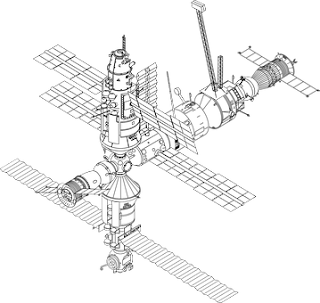
As we all looked up at the bright shining light and thought about the current global crisis we did share a thought for its three current occupants and how they must be feeling for their own loved ones at this time.

Even at this altitude and under some distortion from the atmosphere it was possible to make out the almost insect-like profile made so distinctive by the massive array of solar panels on its extremities.
The solar reflection was quite pronounced, no doubt accentuated by the lower levels of pollution which are a rare, good consequence of the otherwise devastating health emergency that we are all now very much involved with.
At such times of peril on the surface of planet Earth you would perhaps look a bit enviously at the ultimate means to achieve isolation and the lowest possible risk of exposure to the pathogens of the Covid-19 virus.
That rather base emotion did not even cross my mind at the sight of the ISS.
I did have some empathy with distant ancestors upon witnessing this type of celestial event although I possessed the advantage of prior knowledge of it taking place and had no cause for fear, distress or pit of the stomach sheer horror that will have accompanied a solar eclipse, the passing of a comet or the plummeting to the ground of a fiery meteorite in those times past. We have progressed in intelligence and understanding but I could still sense a deep rooted genetic compulsion to bury the family silver in a deep hole in the middle of a farmers field.
As those who read my blog regularly know I am a bit of a fan of Space and all things astronauty. This started with the first Lunar Landing in 1969 which I think I watched, age 6, on our grainy black and white television followed by other Apollo and Soyuz missions featured in my teenage magazines. The Skylab mission in 1973 was an exciting development as a forerunner of Humans living for prolonged periods in Earth Orbit. The Space Shuttle programme had equal fascination for me but tempered by the two tragic accidents.
A couple of years ago I took part in the Crowd Funding to preserve for future generations the Spacesuit of Neil Armstrong and , as they say, the folks at The Smithsonian sent me the T shirt as part of the reward scheme for contributors.

The ISS has been a particular interest of mine since its launch in 1998 and first occupation in November 2000. Its crewing over the years of 239 has involved the participation, to date, of 19 nations with main representation behind the US and Russia from Japan, Canada, Italy, France and Germany. Single representatives have been sent from 12 other countries from all continents.

As we all looked up at the bright shining light and thought about the current global crisis we did share a thought for its three current occupants and how they must be feeling for their own loved ones at this time.
Thursday, 2 April 2020
Pig Walking Regulations
It just crossed my mind.
If I wanted to take a pig out for a walk could I just do it?
Well, clearly not according to the strict Rules and Regulations in force in the UK for keeping a pig, even a teeny, weeny pet in the form of a micro-pig. I have studied and summarised the guidelines issued by Government which state as follows;
You are considered to be a pig keeper if you keep a pig or ‘micropig’ as a pet.
You have to follow the same regulations as pig farmers. ‘Micropigs’ are pigs bred to be small so they can be more easily kept as pets.
You cannot keep a pet pig at your home until you get a county parish holding (CPH) number from the Rural Payments Agency (RPA). You must also tell the Animal and Plant Health Agency (APHA) that you’re keeping pigs, within 30 days of your first pet pig arriving on your land.
APHA will give you a herd mark. Herd marks are 1 or 2 letters followed by 4 digits, eg A1234 or XY9876.
You will need this to identify your pig or micropig if you move it from your holding (apart from for walks).
You need to get a licence from your APHA to walk your pig outside your home or premises.
APHA may not approve your walking route if it poses a health risk, for example if it passes close to a such establishments as a livestock market , pig farm or a fast food restaurant.
You must have your licence with you whenever you’re walking your pig, and you’ll need to renew it every year.
You must tag, tattoo or mark your pig with identification details if you plan to move it away from your home or premises (eg for a walk under licence or to a market, pig farm or abattoir).
You must also report and record any movement of your pig ( I have taken this to refer to travel history rather than toilet habits)
You don’t have to report and record the movement if you’re only taking it for a walk under the terms of your licence.(ah, yes it does)
You cannot feed pigs catering waste from any domestic or commercial kitchen, including kitchens that only cater for vegetarians. Catering waste includes used cooking oil.
You generally cannot feed pigs material of animal origin or products containing material of animal origin. The following exceptions apply.
You can feed pigs, liquid milk or colostrum produced on the same holding the pigs are kept on , former foodstuffs that contain rennet, melted fat, milk or eggs, as long as these materials are not the main ingredient ,milk, milk products and white water (water used to clean dairy equipment) in some cases (find out when you can feed milk and milk products to farmed animals) fishmeal, di-or tri-calcium phosphate, or blood products in some cases (find out how fishmeal, di-or tri-calcium phosphate, or blood products have to be processed before they can be fed to farmed animals).
You can get pig food from a premises that handles material that cannot be fed to pigs, but only if both of the following apply: the premises has a procedure keep material that can be fed to pigs separate from material that cannot be fed to pigs
Contact the Animal and Plant Health Agency if you’re still unsure whether you can feed something to your pig,
Happy Pig Walking after all that!!
If I wanted to take a pig out for a walk could I just do it?
Well, clearly not according to the strict Rules and Regulations in force in the UK for keeping a pig, even a teeny, weeny pet in the form of a micro-pig. I have studied and summarised the guidelines issued by Government which state as follows;
You are considered to be a pig keeper if you keep a pig or ‘micropig’ as a pet.
You have to follow the same regulations as pig farmers. ‘Micropigs’ are pigs bred to be small so they can be more easily kept as pets.
You cannot keep a pet pig at your home until you get a county parish holding (CPH) number from the Rural Payments Agency (RPA). You must also tell the Animal and Plant Health Agency (APHA) that you’re keeping pigs, within 30 days of your first pet pig arriving on your land.
APHA will give you a herd mark. Herd marks are 1 or 2 letters followed by 4 digits, eg A1234 or XY9876.
You will need this to identify your pig or micropig if you move it from your holding (apart from for walks).
You need to get a licence from your APHA to walk your pig outside your home or premises.
APHA may not approve your walking route if it poses a health risk, for example if it passes close to a such establishments as a livestock market , pig farm or a fast food restaurant.
You must have your licence with you whenever you’re walking your pig, and you’ll need to renew it every year.
You must tag, tattoo or mark your pig with identification details if you plan to move it away from your home or premises (eg for a walk under licence or to a market, pig farm or abattoir).
You must also report and record any movement of your pig ( I have taken this to refer to travel history rather than toilet habits)
You don’t have to report and record the movement if you’re only taking it for a walk under the terms of your licence.(ah, yes it does)
You cannot feed pigs catering waste from any domestic or commercial kitchen, including kitchens that only cater for vegetarians. Catering waste includes used cooking oil.
You generally cannot feed pigs material of animal origin or products containing material of animal origin. The following exceptions apply.
You can feed pigs, liquid milk or colostrum produced on the same holding the pigs are kept on , former foodstuffs that contain rennet, melted fat, milk or eggs, as long as these materials are not the main ingredient ,milk, milk products and white water (water used to clean dairy equipment) in some cases (find out when you can feed milk and milk products to farmed animals) fishmeal, di-or tri-calcium phosphate, or blood products in some cases (find out how fishmeal, di-or tri-calcium phosphate, or blood products have to be processed before they can be fed to farmed animals).
You can get pig food from a premises that handles material that cannot be fed to pigs, but only if both of the following apply: the premises has a procedure keep material that can be fed to pigs separate from material that cannot be fed to pigs
Contact the Animal and Plant Health Agency if you’re still unsure whether you can feed something to your pig,
Happy Pig Walking after all that!!
Wednesday, 1 April 2020
Take One Donkey Tablet every 3900 years
Kültepe, the ancient city of Kanesh, was a powerful and cosmopolitan city located in northern Cappadocia in central Anatolia.
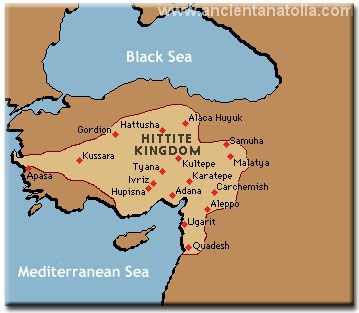 During the early second millennium B.C., it became part of the network of trading settlements established across the region by merchants from Ashur (in Assyria in northern Mesopotamia).
Travelling long distances by donkey caravan, and often living separately from their families, these merchants traded vast quantities of tin and textiles for gold and silver in addition to controlling the copper trade within Anatolia itself.
Although the merchants adopted many aspects of local Anatolian life, they brought with them Mesopotamian tools used to record transactions: cuneiform writing, clay tablets and envelopes, and cylinder seals. Using a simplified version of the elaborate cuneiform writing system, merchants tracked loans as well as business deals and disputes, and sent letters to families and business partners back in Ashur.
These texts also provide information about the greater political history of Ashur and the Anatolian city-states as well as details about the daily life of Assyrians and Anatolians who not only worked side-by-side, but also married and had children together.
At Kültepe, thousands of these texts stored in household archives were preserved when fire destroyed the city in ca. 1836 B.C. and provide a glimpse into the complex and sophisticated commercial and social interactions that took place in the Near East during the beginning of the second millennium B.C.
This tablet is of a type used by the Assyrian merchants to track the income and expenses generated by caravan shipments.
 The cuneiform text, read from left to right, records not only the amount of silver invested in tin and textiles, but also the less commonly traded precious stone lapis lazuli, which was sourced from Afghanistan.
In addition to investments in trade items, these shipments required various expenditures like clothing and wages for guides, as well as donkeys and their equipment and fodder.
Donkeys became important trade items themselves and were often sold upon the caravan’s arrival in Anatolia after the arduous 6-8 week journey from Ashur.
The tablet also records other fees, payments, and purchases, before calculating the total money owed to the prominent merchant Imdi-ilum who was active in the caravan trade between 1888 and 1876 B.C.
Interestingly, the final balance recorded in the tablet, 1 mina and 50 shekels of silver, is slightly more than the actual total calculated from the figures provided (1 mina, 48 5/6 shekels). Such minor discrepancies are common in the Old Assyrian texts and several erasures on the text indicate the care with which the account was made.
Text sourced in its entirety from New York Metropolitan Museum of Art- Public Domain)

Travelling long distances by donkey caravan, and often living separately from their families, these merchants traded vast quantities of tin and textiles for gold and silver in addition to controlling the copper trade within Anatolia itself.
Although the merchants adopted many aspects of local Anatolian life, they brought with them Mesopotamian tools used to record transactions: cuneiform writing, clay tablets and envelopes, and cylinder seals. Using a simplified version of the elaborate cuneiform writing system, merchants tracked loans as well as business deals and disputes, and sent letters to families and business partners back in Ashur.
These texts also provide information about the greater political history of Ashur and the Anatolian city-states as well as details about the daily life of Assyrians and Anatolians who not only worked side-by-side, but also married and had children together.
At Kültepe, thousands of these texts stored in household archives were preserved when fire destroyed the city in ca. 1836 B.C. and provide a glimpse into the complex and sophisticated commercial and social interactions that took place in the Near East during the beginning of the second millennium B.C.
This tablet is of a type used by the Assyrian merchants to track the income and expenses generated by caravan shipments.

In addition to investments in trade items, these shipments required various expenditures like clothing and wages for guides, as well as donkeys and their equipment and fodder.
Donkeys became important trade items themselves and were often sold upon the caravan’s arrival in Anatolia after the arduous 6-8 week journey from Ashur.
The tablet also records other fees, payments, and purchases, before calculating the total money owed to the prominent merchant Imdi-ilum who was active in the caravan trade between 1888 and 1876 B.C.
Interestingly, the final balance recorded in the tablet, 1 mina and 50 shekels of silver, is slightly more than the actual total calculated from the figures provided (1 mina, 48 5/6 shekels). Such minor discrepancies are common in the Old Assyrian texts and several erasures on the text indicate the care with which the account was made.
Text sourced in its entirety from New York Metropolitan Museum of Art- Public Domain)
Subscribe to:
Posts (Atom)