Tuesday, 7 February 2017

Madest Up Word

It is a word that I only really noticed recently.

In the coverage of the women's singles final of this years (2017) Australian Open Tennis the victorious of the Williams' sisters received the rightful accolade of being the most winningest player in the history of the game.

Winningest, it seems to be drived from a combination of winning and best and on first impression an example of urban slang, internet invention and social media abbreviation.


It is actually a bit of an olde worlde term. The Online Etymology Dictionary, an authoritative and credible source  records that winningest first appeared in the written record by 1804 although no actual use of it in any context for that era has been produced to validate this. Perhaps the best evidence of its 19th Century origins could have been its use to describe the crowning of Napoleon Bonaparte as Emperor of France in 1804, as in "he was the winningest personality of the post Revolutionary Era".

Of course that was never the case.

Since hearing it in a sporting context the word winningest has crept into many more general interest commentaries and articles that I have caught on the TV, the radio and in the media.

The dictionary establishment that is Merriam-Webster call it a “made-up word” and a “lazy degradation of modern language.” It seems that as many people loathe the use of it as those who just accept it in their daily bulletins and news feeds. Both Merriam Webster and the Oxford English Dictionary claim to have traced the word back to the early 1970's and cite,  to support their contention, a report in the Columbia, South Carolina State newspaper which described the sporting prowess of a local team as in the “winningest college basketball team in the nation.”

Since the word appeared , it has been used almost exclusively in the sports pages of the North American press. A writer, educator and blogger, James Harbeck in his long-running blog "The Sesquiotica" eloquently analyses our attitude towards words such as winningest.

"Newness alone isn’t a good reason to find a word immature, though; after all, plenty of much newer words have seamlessly slipped into everyday usage. The resistance to accepting winningest as a “real word” probably comes from its weird morphology and incongruous semantics. We don’t usually slap the superlative -est morpheme onto the -ing morpheme—it seems like a mistake a young child might make—and winningest may be the only English word to feature this odd combination. Sure, present participle forms can serve beautifully as adjectives, but even words like charming and stunning—which we probably use more often as adjectives than as verbs—are compared using more and most rather than the -er and -est suffixes. Yet this semantic mismatch is why winningest has found a niche as a functional word, despite the many reasons it shouldn’t exist. It doesn’t actually mean “most winning,” does it? To be the winningest means to have the most wins or victories, or to have the most success, typically in a sports context. And in that context, it’s unambiguous, succinct. You may wrinkle your nose at a phrase like “the winningest team in the league,” but you’re unlikely to be confused by it, and any other way of expressing the same concept would simply take more syllables"

Wordsmiths and language purists may have an objection  to this “non-word,” but there is no denying that winningest is beginning to take on the rest of the world and pop up in many other spheres of everyday life.

Other words have in a similar way crept into our consciousness such as funner (more fun) and fuller (more full).

You never know we may soon hear such things as eatingest (most tasty), drivingest (proficient at driving), sleepingest (most comfortable bed) and accept them as the norm (normest?)


Monday, 6 February 2017

Fountain of Knowledge

For my 50th birthday my grown-up children presented me with an equivalent number of my favourite confectionery product- the classic Barratt Sherbet Fountain.

The traditional version has been made by Barratt's since 1925.


I grew up with the 1960's and 70's packaging of a cardboard tube, about one imperial inch in diameter around which the distinctive coloured and logo'd label was stuck with a stub of a liquorice stick poking out of the slightly twist- closed top.


The trouble was that everything got a bit soggy during the normal method of consuming the contents, typically involving a lot of spit.

This was mainly around the intended use of the liquorice as a straw with the hollow middle being activated by the simple act of biting off the crimped end. Something had to change and what with the emphasis on hygiene, health and safety this type of light and porous wrapper could not survive.

The actual quality of the sherbet varied significantly depending upon the environment in which the tubes were stored or shop displayed. There was nothing worse than the anticipation of a sharp and fizzy sherbet content being destroyed by a rather dry and tasteless powder  following an attack by airborne moisture.

So in 2009 the longstanding packaging was replaced by a plastic tube with a solid liquorice stick (was it really a bit thinner and shorter or did it just seem like it?) protected by a twist-off lid.


This change may have been the first of many involving confectionery products (Snickers name change, Opal Fruits, Spangles, shrinking walnut whips, Toblerone reduction, etc) to upset the likes of traditionalist Daily Mail newspaper readers who blamed it on bureaucracy gone mad, the European Union and everyone else.

It was a case that the nation had to be re-educated in how to tackle a sherbet fountain. The "new" format meant that the sherbet had to be be licked off the liquorice or eaten directly by pouring straight into the mouth . This latter method could result in a violent sneeze or cough sending a huge cloud of almost vapourised powder into the air.

My favourite way which is still the case today is to pour out the contents into a cereal bowl and use the tip of a teaspoon to take up small amounts. This intensifies the whole experience. I know that some found the new version too much of a different experience from the original paper-wrapped sweet and never adapted to it.

Although Barratts have been producing sherbet for nearly 100 years it is a very old concoction indeed.

The word "sherbet" is derived from the Turkish şerbet, itself from the even more ancient  Persian language and in turn from the mists of long lost Arabic , specifically sharba, a drink, from "shariba" to drink. A more modern incarnation comes from French "sorbet", the Italian "sorbetto" and in a full etymological circle back to the Turkish "şerbet". The word is cognate to syrup in English.

Historically it was a cool effervescent or iced fruit soft drink particularly favoured in the Middle Eastern climate and culture. The meaning, spelling and pronunciation have fractured between different countries. It is usually spelled "sherbet" but more often as not becomes "sherbert".It must not to be confused with the North American "sherbet" which if ordered over a Gelateria counter would mean that you are served with a variant of the iced dessert sorbet.

Compared to the ancient world it was only in the 19th century that sherbet powder (soda powder) became popular. A popular practice of the time was to "Put a spoonful of the powder in a cup of water, mix it and drink it as soon as possible, during the time of sparkling. ... Because this way the most of acid of air is lost ... it is more practicable to put the powder into the mouth and flush it with some water"

Sherbet is, for all of the mystique and history a very simple mixture of ingredients.

In the United Kingdom and other Commonwealth countries the distinctive fizzy powder derives from four main constituents. 1) sugar 2)flavouring 3)edible acid 4)base. The acid may be tartaric, citric or malic acid, and the base may be sodium bicarbonate, sodium carbonate, magnesium carbonate, or a mixture of these or other similar carbonates .To this is added a large amount of sugar to mask the unappetising flavour of the reactive powders usually icing sugar, and fruit or cream soda flavouring.

The classic Barratt Sherbet has an ingredients list of Sugar, Treacle, Wheat Flour (Wheat Flour, Calcium Carbonate, Iron, Niacin, Thiamin), Cornflour, Sodium Bicarbonate, Acids (Citric Acid, Tartaric Acid), Natural Colour (Plain Caramel), Liquorice Extract, Anti-Caking Agent (Tricalcium Phosphate), Flavouring and Aniseed Oil.

Here is the science bit.

The acid-carbonate reaction occurs upon presence of moisture, mainly the aforementioned abundance of spittle although water or juice will do the same. Sherbet used to be stirred into various beverages to make effervescing drinks, in a similar way to making lemonade from lemonade powders, before canned carbonated drinks became ubiquitous. Sherbet is now used to mean the powder sold as a sweet.

With my grubby childhood hands grasping my pocket money and if it was not possible to purchase a Sherbet Fountain then there were other sherbet content goodies. In Northern England where I grew up , kali (pronounced "kay-li" with emphasis on the second syllable) is a crystal form of sherbet, often packaged in straws (similar to the Stateside Pixy Stix) and available in a variety of colours and flavours.

The sherbet lemon remains as a widely consumed sweet in the UK, and is included in many sweet shops. It is the main flavour of boiled sweets with powdered sherbet centres - such as sherbet fruits, where sherbet limes, strawberries, blackcurrants, raspberries and orange are popular flavours. The sherbet lemon has a citrus taste and is sour and tangy. If sucked slowly, although it is difficult to resist biting into the shell, as the outer casing fractures the sherbet in the middle explodes, making the sweet suddenly more sour.

Sherbet dips or Sherbet Dabs are also popular, such as the Dip Dab also by Barratt. They consist of a small packet of sherbet, with a lollipop sealed into the bag. Once the lollipop has been licked, it can be dipped into the sherbet and then sucked clean, alternatively it can simply be used to shovel the sherbet into the mouth.

Another  type of sherbet dip is the Double Dip by Swizzels Matlow, where the packet is divided into three sections. One contains an edible stick which can be licked and then dipped into the other sections, each of which contains a different flavour of sherbet such as strawberry, orange, cola. It must be a generational thing because I never took to this modern, crazy, confused concept.
.
I did like the paper and then later plastic straws filled purely with fruit-flavoured sherbet. The most common lengths were 10 cm and 50 cm. The price of these straws ranged from the decimal 5p to £2.00 in the UK depending on size, make and flavour.I have not seen them on the sweet counter for some time now.

Another favourite of mine is the flying saucer which are small dimpled discs made from edible coloured rice paper and filled with white unflavoured sherbet (the same form as in Sherbet Fountains). The first flying saucers were produced in the 1960s. It is again a challenge to wait for the paper to dissolve in the mouth to release the sherbet of optimum fizziness.

Sherbet is also  incorporated into other sweets. On cola bottles and Haribo sours it is used to give an interesting surface texture and zing to what would otherwise be quite bland gelatine items.

In popular culture Sherbet has been used in parts of both the UK and Australia as slang for an alcoholic drink, especially beer. This use is noted in a slang dictionary as early as 1890, and still appears in list of slang terms written today especially lists of Australian slang as in: "We're heading to the pub for a few sherbets." - … pints of beer."

In the UK "Sherbet" is sometimes used to refers to cocaine, which is also consumed as a powder.

To be inebriated is sometimes referred to in the North of England as "kaylied"

I was, on reflection, quite fortunate to get through my childhood years without being arrested or committed . I could often be found wandering about looking vacant with my face covered in white powder and carrying the almost drug culture paraphenalia of a spoon and bowl . Worst of all was the putting of myself and others at risk from poisoning on the occasions that I foolishly tried to make sherbet from scratch. Pass me the acid and bicarb.

Typical kitchen scene in home made sherbet production


Sunday, 5 February 2017

Mark Twang

Mankind has been preoccupied for centuries with a specific issue.

It has demanded many, many hours of pondering and a good deal of flair and invention.

I am talking about the age-old problem of how to stop your trousers falling down. In some situations it may be regarded as pure comedy but in everyday life and scenarios having a reliable grip on your trousers is important.

This was obviously the dilemna facing Samuel Longthorne Clemens and which in 1871 led him to file a Patent (ref; 121992) in his native United States for "Adjustable and Detachable Straps for Garments" or in plain speak- what we British call braces and the Americans, suspenders.

Clemens main priority will have been borne out of a concern for unstable trousers but any revenue from his invention will have helped to sustain him in the lean years following publication of his first book in 1869 and until he brought out, under his pen name Mark Twain, "The Adventures of Huckleberry Finn" in 1876.

Many others have contributed to the improvement in methods of  keeping trousers hoisted and presentable.

Earliest references to braces and suspenders seem to be from earlier in the 18th Century when the ever fashion conscious French developed a support system. This will have coincided with the trauma of transition from breeches to the forerunners of the modern trousers. There may be a link between getting your garments under control and Revolutionary tendencies given the chain of events that took place in that part of Europe in that momentous era followed by decades of military campaigning and conquest that took Napoleon as far south as Egypt and north to Moscow.

As an indicator of the importance of having well hung trousers you need look no farther than the list of relevant patented inventions in the US and England from the time of Twain to the present day.

You would not think it possible that such a simple requirement would warrant such brain activity and resourcefulness. There have been the champions of "H" shaped suspenders, the emergence of the classic "X" profile and what we now accept as the standard "Y" configuration.

The latter years of the 19th Century saw a proliferation of Patents on both sides of the Atlantic. Albra E. Overlook of Maine in 1887 brought into play a one piece suspender with front and back straps forming the trouser connections.

Overlook  1887

Not to be outdone, Richard Lewis, a tea merchant from Middlesex, UK in the same year introduced braces for the specific purpose of suspending trousers. By 1890 Edward Moore from Kansas patented his invention of button fixings between suspenders and trousers but this would within only four years be superceded by the availability of metal clasps.
I am not sure if any statistics have ever been formulated for trouser suspender related accidents but if you have ever worn them you will be very aware and not  little bit frightened about the potential for whip induced injuries from the heavy clasps on the elasticated webbing. In addition anyone observing a wearer of suspenders/braces cannot resist getting in a twang which can be both startling and smarting to the recipient. A persistent problem, tackled by Edwin Scofield of Connecticut in 1898 was his "back end improvement" to counter the working loose and release of the back straps of the "X" type suspenders and thus avoiding awkward manouvering to re-attach them if a family member or kind hearted stranger were not in attendance to offer this service.

William Fisher, coincidentally also from Connecticut, in 1899 drew attention to what he called "the complexity of a mechanism disproportionate to the requirements to be attained". He was clearly emphasising that trouser suspenders were being over -engineered to a level that was just not necessary. Carl Ludolph from Ontario, Canada sought to resolve another annoyance whereby the shoulder straps would fall away promoting much discomfort and inconvenience to the wearer.

Ludolph 


By the early years of the new century a few dissident voices could be seen in the Patent Registers including Alexander Warshauers 1905 invention of a "Trousers Pad" which was a thickened out waistband in conventional trousers and would dispense with the need for suspenders altogether.

Frank Zurn took this further in 1911 with the innovation of an elasticated waist. This would form, in the twentieth century and beyond perhaps the greatest threat to suspenders being able to cope with expanding waistlines as well as appealing to manufacturers in giving the economies of scale for a "one size fits all" garment.

For the first time a woman featured in the debate when in 1928 Gertrude Burns registered her Abdominal Belt system which gave further possibilities in fashion design for the female form away from the more male orientated means of support.

Braces were becoming a bit dated in style by the 1930's and a few entrepreneurs sought to offer methods to hide the unsightly straps and clasps from view. Clarence Bucholz of Ohio invented such an underclothes arrangement as did others in the same era.

As with the wearing of hats it would be the post war period that saw the decline in the use of suspenders. They became associated with the criminal fraternity or banking class both of whom attracted suspicion and mistrust.

It was popular culture in the 60's and 70's that saw a return of braces being a part of the uniform of skinheads and punks in the UK in particular.

One area that suspenders and braces have always remained in everyday use is the armed and civilian forces and this has encouraged many inventions from inflatable versions to heavy duty utility types for use in the construction and emergency services.

The first decade of the 21st Century saw some resurgence in suspenders  with decorative and themed designs, maternity friendly wear and as a means to control that scourge of current fashion- the saggy pants phenomena.

Just as it seems that suspenders and braces have reached a state of obsolescence they return with a new determination and prove to be relevant to a whole new generation keen not to let their trousers end up around their ankles.

Saturday, 4 February 2017

Canvas Opinion

We all know but refuse to acknowledge that modern life really messes with the human body clock.

We possess a genetic affinity for the natural light and dark cycle of the Earth day, that is to say that we are entrained to get up when it is light and go to our beds when it is dark.

Such is the pace of our lives today and the stresses and pressures that go with it that we tend to look unfavourably on those who go to bed early. We think that they are sickening for something, dodgy, introverted or just hiding away from life.

Ours is a world of almost perpetual artificial lighting.


This actually has a scientific term, "constant summer photoperiod"  and extends across all of the seasons. We are in a constant battle between the deep rooted desire to follow the natural cycles of our Circadian clock and the feeling that we have to extend our activities for as long as possible thanks to the availability of light bulbs.

There are just too many factors in play that disrupt our body clocks.

As well as artificial lighting there are disruptions to our routines, stimulants such as caffeine, the screens of personal data devices and DVD box sets. Staying up late under the influence of such things does have implications for performance in our work, at school, whilst driving  and operating machinery. There are added health issues such as susceptibility to diabetes, obesity and substance abuse. In my case I just get very moody and irritable which is no fun for my family or indeed me.

All is not however completely lost.

Scientists over a number of studies have shown that our body clock can re-align to natural cycles quite easily. In a natural summer when the ratio of daylight to darkness is as much as 14 hours forty minutes to 9 hours 20 minutes respectively our circadian clock attunes perfectly to solar time. It is just that many things obstruct this process. A particular experiment illustrated that this re-adjustment can be best achieved by partaking in the activity of camping outdoors.


Various randomly selected adults were laboratory tested for their Melatonin Rhythm which is the most precise marker of our internal biological time before being set loose in the Rocky Mountains of Colorado, USA to live under canvas.

One group went for a full week in the depths of a snowy December and the other over a July weekend in the same location.

Artificial light and electronic devices were prohibited with only the sun, moon and camp fires permitted as light sources.

In the great outdoors those in the winter study were exposed to thirteen times the illuminance levels of electric light. There was a higher exposure to red, green and blue light on the spectrum. Although the wake-up times were similar to normal every day routines it was found that sleep time commenced some two and a half hours earlier. Of course being in the wilderness in a harsh, cold climate does introduce a number of specific issues. The study group were confined for long periods to their warm, cosy tents and sleeping bags and a higher level of physical activity was recorded as there was nothing much else to do than do a bit of local hiking.

In effect, the conditions and lifestyle were quite close to those that we would expect our ancestors to have experienced in a pre-industrialised, consumerist, urbanised and digitised society.

The summer camp, likely to have been far more pleasant in terms of a Colorado climate confirmed the winter findings.

So, we all now know what we have to do to re-set our natural body clocks.

As for tent camping, I have done that, got the midge bites, suffered sun stroke, cowered in fear of being blown away in a gale, endured cold tinned food when the gas has run out, had to dig a trench around the tent under flood conditions, chipped away at carcinogenic al-fresco barbecue offerings and spent hours in damp clothes and soggy footwear.

Having said that, I do recall having had some of the best nights rest ever.
Typical activity for fully rested tent campers


Friday, 3 February 2017

Natural Selection

Voting started yesterday for the 2017 European Tree of the Year with 16 nominated for the shortlist. They are all magnificent examples of their species, of great age and character and with many stories to tell of what they have silently witnessed over the ages. Here are the contenders in no particular order of preference.


The Brimmon oak: pedunculate oak (Quercus robur), over 500 years old, Newtown, Powys, Wales, UK. A new bypass was ‘bent’ to save this ancient pollarded oak known as ‘the Brimmon oak’. It has been cared for by one family for generations – they even have wedding photographs from 1901 that were taken under its canopy. But in 2015 it was threatened by a new bypass. Mervyn Jones, who farms the land, campaigned hard to save the tree with ‘tree hunter’ Rob McBride and following a 5,000-signature petition to the Welsh Assembly, the bypass route was adjusted.


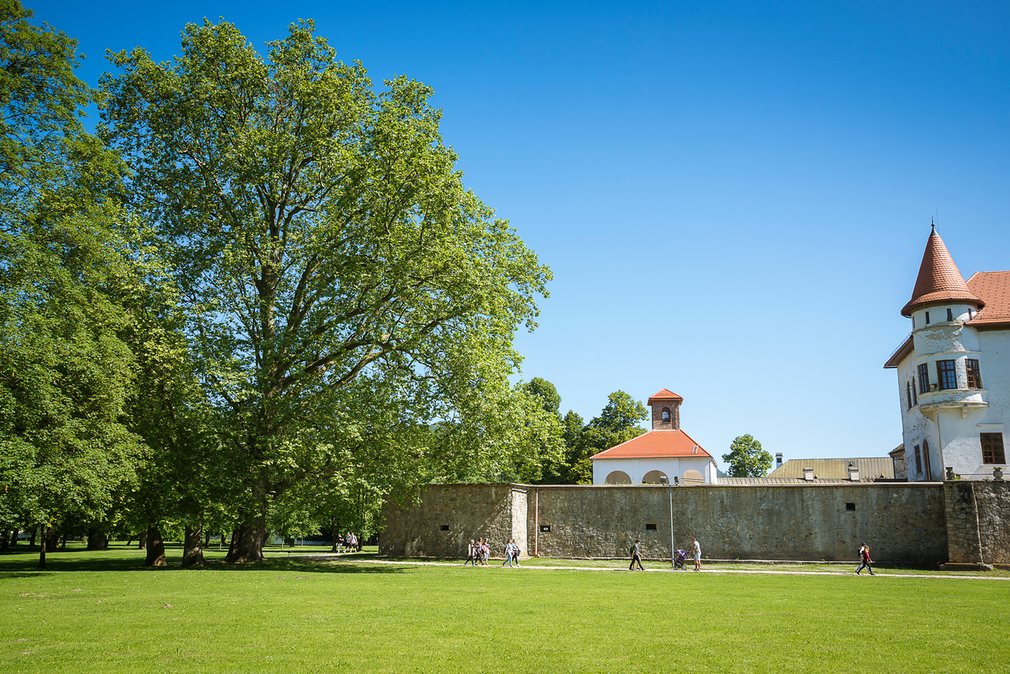
Plane tree from Budatin: plane tree (Platanus hispanica), 270 years old, Žilina, North Slovakia. A London plane is the largest of two plane trees in the Castle park, which was founded during the reign of Count Ján Suňog in 1745 when his head gardener was Ján František Roder from Silesia. Near the large healthy tree grows another plane, that is smaller and sickly. The two plane trees grow together as two different brothers, their roots are inextricably bound.


The ‘ding dong’ tree: copper beech (Fagus sylvatica f. purpurea), about 30 years old, Prestonpans, Scotland, UK. Beloved by generations of pupils at Prestonpans Primary, the tree gets its name from a game invented by pupils who compete to touch its trunk shouting ‘ding dong!’ Its protecting canopy makes it an ideal outdoor classroom, and it brings particular calm to children with complex emotions. It is also the subject of many science and art projects. The headteacher says this copper beech is so woven into the life and identity of the school it’s almost like having an extra member of staff.


Oak Józef: English oak (Quercus robur), 650 years old, Wiśniowa, Podkarpackie province, Poland. The special history of Oak Józef is linked to the place where it grows. The Mycielski family was so charmed by the beauty of the area that they bought a mansion there that became a cultural and intellectual centre of the region. During the second world war the oak provided shelter for a Jewish family hiding from the Nazis. Also the oak’s image was printed on Polish 100 złoty bills. Today, oak Józef is admired by many visitors and is captured in photos and paintings.


Old Homer: holm oak (Quercus ilex), about 200 years old, Rostrevor, County Down, Northern Ireland, UK. ‘I’m the 200-year-old leaning holm oak near the fairy glen in Rostrevor – now I need support! I’ve been loved by generations of local people; for decades, artists, writers and musicians have been inspired under my evergreen leaves. Charles Dickens, CS Lewis and the young Princess Elizabeth have walked the ground I stand on. Hundreds of children have climbed me or swung from my branches. We’ve all become friends. I hear your voices: you touch my spirit as I reach for the light.’


The Stelmužė oak: common oak (Quercus robur L.), more than 1,000 years old, Stelmužė village, Zarasai district, Utena county, Lithuania. One of Europe’s oldest trees, and a symbol of strength, stands near a 17th-century wooden church built by Latvian masters without the use of a single iron nail. Lithuanians say that a man is ‘as strong as Stelmužė oak’. Tourists enjoy its beauty and rich history of pagan sacrifices under its branches or the skeleton and rifle of a Napoleonic soldier found in its cavity. Its acorns propagate many oaks, preserving this veteran tree‘s genes for years to come.

Hugh O’Flaherty’s trees: Mediterranean palm, Italian cypress, holm oak, stone pine, 25 years old, Killarney, Co. Kerry, Ireland. Killarney native, O’Flaherty helped to save 6,500 lives during the Nazi occupation of Rome. This grove of Mediterranean trees was planted in his honour in the Muckross Arboretum in Killarney national park in June 1994 to commemorate the 50th anniversary of the liberation of Rome. A poem, O’Flaherty’s Trees by Brendan Kennelly was read on that occasion by the poet and now forms the centrepiece plaque at the grove.

Jászai Mari square plane tree (Platanus), 80 years old, Budapest, Hungary. In the heart of the capital, and its people, this giant plane is one of the most visited trees in the country. It is eternalised on innumerable family photos with family members resting in its shade. One of the outstanding figures of Hungarian literature, Miklós Radnóti and his wife, Auntie Fifi often walked their dog and had picnics in the shade of the tree. The area surrounding the plane tree became a park in 1903, and it won the title of ‘number one ornamental garden of Budapest’ in the ‘90s.


Climbing beech in Hoppenrade: European beech (Fagus sylvatica), 175 years old, Hoppenrade, Brandenburg, Germany. In the meadow behind our school stands a large, old beech. It is part of our lives and symbolises strength, cohesion, vitality, faith and the transfer of knowledge. Under her canopy we hold open-air classes and it’s a special place all year round – in the spring we can observe sprouting buds, in the summer it gives shade, in the autumn we kick the sea of leaves, in the winter we build a snowman by the trunk. Pupils and staff alike admire and protect our old beech.


The Céron park saman: rain tree (Albizia saman), 300 years old, Le Prêcheur, Martinique, France. This saman, or rain tree, used to shelter coffee and cacao plantations. It comes from the Habitation Céron park (an old sugar plantation from the 17th century), and is registered as one of the largest trees in the Lesser Antilles. A protective tree, which itself is protected from the weather, it has survived all of the island’s cyclones, as well as the eruption of Mount Pelée volcano in 1902.


Russalka oak: common oak (Quercus robur L.), about 100 years old, Tallinn, Harju county, Estonia. A short distance from the statue of Russalka – erected to commemorate the sinking of this ship with its 178 Estonian and Russian seamen – stands an oak tree with an unusual shape. This spot is a favourite meeting place in Tallinn. When this large oak tree became an obstacle to urban development the local community campaigned to save it. Hopefully, this graceful oak will continue to connect different people and cultures for centuries to come.


The sycamore gap tree: sycamore (Acer pseudoplatanus), several hundred years old, Hadrian’s Wall, Northumberland, England, UK. This is probably the most photographed spot in the whole of Northumberland national park. Here, a sycamore tree grows in a dramatic dip with Hadrian’s Wall rising up either side. The 1991 film Robin Hood: Prince of Thieves, starring Kevin Costner, was filmed here. The tree has been known as The Robin Hood Tree ever since.


The lime tree at Lipka: small-leaved Lime (Tilia cordata), 800 years old, Lipka at Horní Bradlo, Pardubice region, The Czech Republic. This lime tree grows by a road connecting the 13th-century Lipka manor and a former cemetery, now tomb of the manor’s first owners, the Kustoš family. For 800 years the tree has welcomed local people to the world and seen them on their last journey. It is said that 15th-century general Jan Žižka camped under its branches and philosopher Jan Amos Komenský stayed here briefly. It is said that a couple that make love under the tree will share an everlasting love.


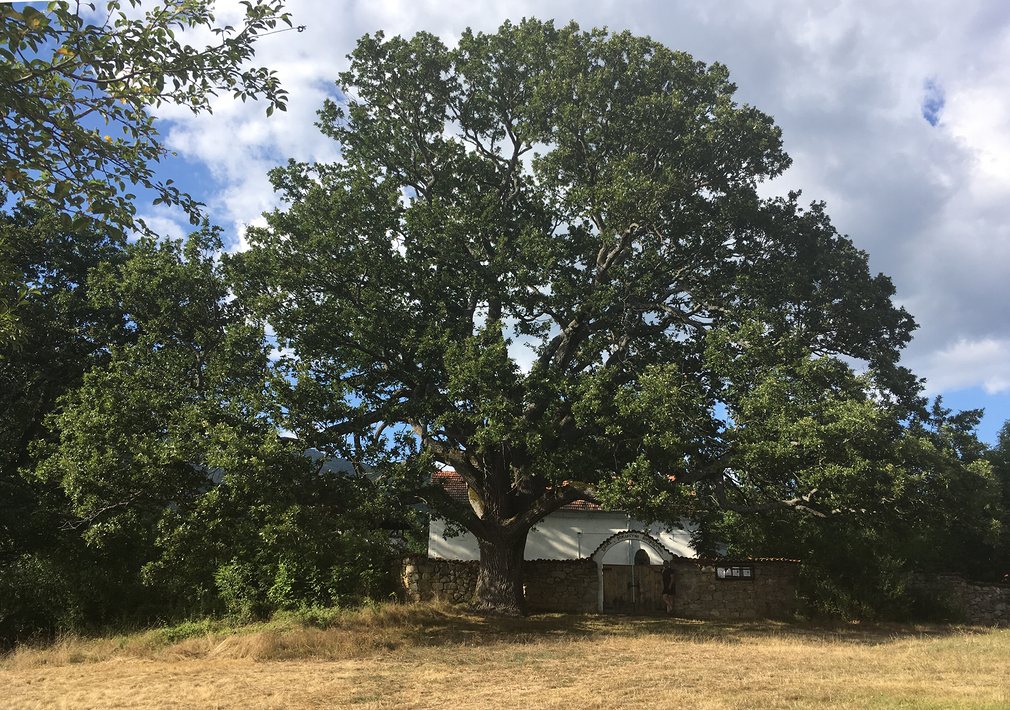
The sessile oak by Nasalevtsi church: sessile oak (Quercus Petrea), over 600 years old, Nasalevtsi village, Tryn Municipality, Bulgaria. This venerable sessile oak grows by the outer wall of the local church of the Nativity of Mary. The place is considered sacred and there was a church here as early as the period of the Second Bulgarian State (12th-14th century). The current church was built in 1859, when people used to make annual sacrificial offerings to saints here to pray for good health, protection from storms, snakes, attacks by invaders, and also for rain.

The Massemen village lime tree : large-Leaved linden (Tilia platyphyllos), 380 to 440 years old, Massemen, East-Flanders, Belgium. This lime tree has been beloved in Massemen for over 400 years, as befits any veteran tree. Its knobbly trunk, hollow inside and leaves speak for themselves. It groaned ‘in fright’ when the village church burned down in 1645, feasted with the lords of Massemen when the village became a princedom and saw French invaders beaten in 1798. The lime tree spreads a delicious perfume and is featured in many paintings. People still fall in love under its canopy.

Aprisquillo pine: black pine (Pinus nigra), over 350 years old, La Adrada (Ávila), Spain. ‘By the stream, among clouds and mountains I find myself. I’m a black pine, although everyone calls me ‘Aprisquillo’. I grew huge, tall, strong and vigorous. I hear you coming and I know you come to see me. You embrace me and give me your hand, you surround me, you sit on my exposed roots, you talk and talk about my dimensions. Together, we remember past stories about fires and plagues which I have suffered. I enjoy in silence and smile. Here, I will be forever, as a guardian, waiting for you.’

Thursday, 2 February 2017

Defying Van Halen

Is there a brief moment in time when we suddenly become frightened of jumping off things?

That is to say up until that point we had no qualms or reticence about throwing ourselves off walls, out of windows, into water from some height or onto other soft landing zones.

In my youth I was by no means fearless or reckless but thought nothing of leaping off a bridge parapet into a river, abseiling down a steep rock face or taking a turn on a rope and pulley death slide from high up in a tree down into a field below.

There were of course factors at play.

If in a group there is certainly the pressure imposed by peers. If a mixed group then there is the need to impress the opposite sex by acting out of bravado and machismo whilst giving the impression that you do this type of thing just about every day and twice on a Sunday.

I cannot pinpoint the exact date or event in which my previous glorious celebration of gravity was overidden by a sense of fear and responsibility and I could not go through with something which had previously not been a problem.

It may have simply been the case that the spirit was willing but the flesh was weak as they say.

I was therefore fascinated by a short documentary from Sweden by two film makers, Van Aertryck and Danielson in which they sought to portray the inherent doubt and fear of humans when confronted by a particular challenge.

In this instance some 67 people answered an online advertisement asking for participants to jump from an indoor 10 metre (33 imperial feet) diving tower into a municipal swimming pool.


The only criteria was that they had not done it before.

In return for a small fee all that was required was for them to climb up to the platform and take a walk to the edge before making a decision on whether to jump off or climb back down. It was a flat rate reward with no incentives or co-ercement to take that leap off into the air at what is some reasonable height above the water.

There was no element of covert filming:six cameras were trained on the platform and microphones were in full and plain sight. Those taking part waited in line on the poolside until it was their turn. The presence of a film crew and the interaction amongst those preparing to climb up for the challenge did seem to introduce an element of peer pressure. It may have been the case that being paid imposed somewhat of an obligation to jump. I myself in the same situation would feel a bit guilty about taking someones money and then, in effect, just running away.

In this interesting psychological exercise some 70% of the participants did go through with it and plunge feet first into the clear blue, chlorinated water of the pool.

The film footage does show the full range of human emotions from pure fear to personal angst , casual interest, determination and deep doubt, regret and self loathing. Physical traits were interesting with hand flapping around the face, a sharp exhaling of breath, not a little frustrated stomping and a bit of stretching in readiness although it appeared that those who on first impression looked up for it and went through the motions were not able to go through with it.

Language picked up by the microphones varied from "uh-oh", "all-righty lets do this" and the expected "it's actually higher than it looks" to outright swearing either in self encouragement or to signify abandonment of the task.

One senior lady was actually on her way back down the steps when she turned back and jumped. That age group of women was shown to be the most daring .

The interaction between pairs on the diving platform introduced the dare element of "you go first and then I will follow" although I do not have much hope for one young couple where the boyfriend was relentlessly bullied into making the jump by his partner. The younger women were inspiring in their attitude of "Just make a decision and stick to it" which put some of their male counterparts to shame.

A trend that I did notice was that there were not many men of my age group present. For all of the psychological aspects of the documentary film I am reassured that I am not the only lily-livered, weak kneed, middle aged cowardly waster on the planet.

Not me !

Wednesday, 1 February 2017

Potholed history of the ten foot

It must be a feature common only to the city of Hull.

I refer to the phenomena of the ten foot roadway or as it is referred to with alternate affection and detestation, just a ten foot.

If I happen to mention it in even casual conversation or in a report or correspondence to an out of towner, usually someone of an expensive legal educated background, then there is always a long pregnant pause before a sheepish voice requests clarification of what it comprises. It is, as they say, what it says on the tin. It is a roadway and it is ten feet wide. I know because I have been a bit of a sad sap and have actually measured them.

The housing stock in Hull has a very high proportion of terraced properties, long regimented blocks with some consisting of perhaps thirty or more dwellings. This was part of the huge expansion of the suburban areas in the period between the two world wars. It was a time of increasing affluence and living standards.

The suburbs were away from the belching industrial operations and less likely to be shrouded in the usual Hull odours from fish processing, tanneries, cocoa and yeast production.

Car ownership was increasing slowly and although low numbers of private cars kept the streets nicely clear and safe for access and children at play, a perceived and attractive selling point for the speculative builders in that era was the ability to park a private car or a works van in sight on the back garden.

The homes, which had all mod cons such as indoor toilets, electric light and heating still required service access for the coal merchant and tradesmen and a cut through the back garden from the ten foot was always preferred to what could be a very long walk around the block.

Under fairly light use the ten foot could sustain an unmade clay based surface or with the better ones being concreted or tarmac dressed. The aggregated rights of way and use over the ten foot demanded reasonable behaviour to prevent obstruction and inconvenience of passage.

As car ownership increased the surfaces inevitably became churned up or damaged. A few good citizens would take on the informal duty of carrying out patching repairs for ruts and potholes. The soot and ash residues from the common use of open fires were ideal for an impromptu repair.

The owners of end terraced houses with elevations flush to the ten foots would express understandable concerns over echoing noise and vibration from unsociable use as well as a risk of splashing and spraying of accumulated surface water up their walls from passing traffic.

In the larger suburban areas of  West Hull the ten foots became a paradise for thieves, pilferers and opportunists, a veritable network of escape routes along which to transport ill gotten goods from garden grown soft fruits to the whole contents of a shed.

The increase in private cars led to an equivalent demand for parking facilities and this heralded the proliferation in the numbers of garages and in particular the cheaper timber and asbestos structures. This was in the prime era of that wonder cement bonded material and well before the expressing of concerns on health grounds.

Soon the ten foots appeared scruffy and home to every form of construction and style of garages, sheds, aviaries, pigeon lofts, summerhouses and play houses.

By the 1970's cars were rarely driven to be parked at the rear of the houses and many ten foots fell into a deteriorated state.

After heavy or persistent rain there were always large pools and ponds to be negotiated by brave souls. I am not however aware of any cases of persons being found face down in such a potentially watery grave. Neighbourhood awareness has led in recent years to the positioning of lockable gates at the entrances to the ten foots. This has had a remarkable deterrent effect on crime levels but quite a bonanza for locksmiths in the provision of multiple keys for all those entitled to use the road.

A high proportion of Hull's resident population has therefore grown up with the ten foot.

Many scarred knees will have been caused by the rift valley of concrete road sections or loose based gravels and tarmac. Many shiny new birthday bicycles will have been left with mangled wheels or frames from frequent jumps and wheelies. No doubt a few babies were thrown out of prams and buggies by uneven ground. Some of these infants may actually have been conceived in the darker shadowy parts of the shanty town of structures.

The ten foot does have some competition on a national basis from the likes of ginnels, snickets, a cut, alley ways, passages and lanes but is intrinsically part of the Hull culture and language.

It will survive long in the pages of urban folklore of which there is a great richness from that north east City