As I stood on one of Scarborough's majestic Victorian streets last week I remarked to one of the locals in passing conversation that the place cannot have changed at all since that halcyon era in its history.
The town gives that impression of sturdiness, immoveability against the winds and tides of the North Sea coast.
The buildings are characterful, many of them four or more stories high having been purpose built in the mid to late 1800's as lodging houses, private hotels, guest houses and as homes of the well to do of Yorkshire and beyond.
The man on that street soon put me right.
He told me about how the town had suffered one of the first hostile actions of the First World War, a barbaric and unprovoked shelling from the sea by two battlecruisers of the German Navy.
The enemy had considered the seaside resort to be a strategic threat to the shipping lanes in that part of the North Sea and their intelligence had suggested that behind the genteel facade there was a sizeable garrison.
The harbour, for centuries a safe refuge, could potentially serve as a base for maritime activities but on the 16th December 2014, a very early phase in the enactment of World War One it would have been very much in its role as a fishing port.
It was early morning on a wednesday and just over a week from Christmas.
There will have been activity in the town with traders and workers preparing for a busy mid week in the run up to the Festive Season.
Two battlecruisers, the Van der Tann and Derfflinger had separated from a larger flotilla of heavyweight fighting ships and were steaming at full speed with the distinctive silhouette of the hills of the town in sight.
At 8 am the first of a total of 500 shells hit a random assortment of targets in and around the town.
A principal focus for the attack was military although in its broadest interpretation being the Medieval castle which had been laid to virtual ruin in the English Civil Wart of the 17th Century. A barrack building was hit, also parts of the ramparts and walls, a Coastguard Station, the harbour lighthouse, the landmark structure of The Grand Hotel and three churches.
The fall of the high explosive shells was indiscriminate.
Commercial and residential buildings had roofs, walls and windows blown out.
A quiet street at the foot of the hill known as Oliver's Mount suffered damage to its housing stock and at 2 Wykeham Street, nearer the town centre, there were the first of the total of 17 fatalities , comprising multiple members of just one family.
One of the 80 injured died later from injuries sustained in the attack.
The onslaught had lasted only 30 minutes.
The two perpetrators made off to join the rest of their battle group wreaking similar mayhem and havoc on the northerly towns of Whitby and Hartlepool where another 120, if not all civilians, died.
The events , exactly 103 years ago today, had a huge effect on the British public.
Those in Scarborough who witnessed the attack had run for their lives in a mad panic, fearing that this was the precursor to a German Invasion Force. A dramatic image representing the barbarism of the Kaiser's Navy was used to encourage menfolk and boys to enlist in the British armed forces and will, no doubt have been the deciding factor for many to sign up to fight for their country.
I will never look upon Scarborough again as just a timeless backwater of English seaside charm.
It has, in its time, been very much on the front line.
Historic England have a great page and short animation on this at Scarborough
Saturday, 16 December 2017
Friday, 15 December 2017
Pieces and Goodwill
Chances are that there will be one at or near the top of the list for Christmas- a jigsaw puzzle.
I was reminded about these perplexing things when I almost walked over one laid out on the floor of a house this week.
Imagine what will have transpired in that home later that day when the owners will have discovered that a crime had been committed. Fortunately, I just managed to sidestep and avoid a potentially major incident although it did cross my mind, only briefly, that it would be very mischievous to pocket and remove a single piece.
Don't get me wrong.A valued part of my upbringing and personal development is attributable to doing jigsaws.
For all of their frustrating traits they are actually quite therapeutic. The human brain hates chaos and anything jumbled up and so an opportunity to return something haphazard to a state of perfect order produces a sensation of genuine joy and peace.
The practice of jigsawing, if indeed that is an actual word, is often part of our upbringing.
We are taught how to pick out corners, edges, obvious colours and features at an early age.
My first childhood jigsaw was just nine large pieces but its successful assembly, eventually, was a source of regular pride and achievement.
Gradually the number of pieces and level of difficulty was increased until the prospect, in later mature life, of a 1000-piece challenge did not seem too daunting.
It is an enjoyable thing putting together a myriad of coloured bits. Time flies when you are absorbed in picking out similar shapes and shades. It is for some a pastime, others a bit more of a hobby and for a few it is an obsession.
The first examples appeared in the mid 18th Century.
They were targeted at children as an educational tool and comprised hand made maps cut up into pieces for re-assembly. The first commercial production began in the 1760's and a London based company, J Spilsbury brought out, in 1766 ,a puzzle entitled "Europe Divided". This will have helped young minds to visualise the complex geographical, physical and political situation across the continent in such volatile times. Prussia and Russia will have been shown as two distinct nations rather than being confused as one and the same which was a common misconception, even amongst those in the diplomacy and military who should have known better.
One depiction of Europe in jigsaw format is reputed to have started a war as incorrectly or not the Ottoman Empire was portrayed as having a larger landed area than it actually had which provoked a reaction from opposing governments.
Children remained as the target market for this type of puzzle as a means to develop their concentration, powers of logic and deduction and neurological development. A much more serious application of the jigsaw was introduced at Ellis Island in New York when a simple task of assembly was adopted by the Immigration Authorities to determine if new arrivals were of suitable mental competence to be given entry to the United States.
In the early years of the 20th century a hobbyist craze evolved with individuals making their own jigsaws using a fret saw but mass production put an end to the fever like activity in sheds and parlours.
The golden age of the jigsaw was during the Great Depression in the United States when an amazing 10 million puzzles were consumed by households every single week. These came out on a weekly basis through the nation's news stands at twenty five cents a piece creating mass hysteria.
Today, to some extent the pursuit of jigsawing has attained an almost secretive and guilty pleasure status. We may be a bit embarrassed about mentioning it in polite company and yet sales and development continue at a strong pace. The old sawdust speckled atmosphere of the traditional manufacturers has given way to a more clinical laser cut product. This gives more scope for trickery and foolery in the cutting of the pieces with, for example, straight edges to be found in the middle of a puzzle causing many to question those hard earned lessons from parents about finding those key pieces.
Buying a jigsaw as a shared family Christmas present has been mentioned this year. I will keep you informed about what happens in due course.
Inspired by BBC4 extra feature
I was reminded about these perplexing things when I almost walked over one laid out on the floor of a house this week.
Imagine what will have transpired in that home later that day when the owners will have discovered that a crime had been committed. Fortunately, I just managed to sidestep and avoid a potentially major incident although it did cross my mind, only briefly, that it would be very mischievous to pocket and remove a single piece.
Don't get me wrong.A valued part of my upbringing and personal development is attributable to doing jigsaws.
For all of their frustrating traits they are actually quite therapeutic. The human brain hates chaos and anything jumbled up and so an opportunity to return something haphazard to a state of perfect order produces a sensation of genuine joy and peace.
The practice of jigsawing, if indeed that is an actual word, is often part of our upbringing.
We are taught how to pick out corners, edges, obvious colours and features at an early age.
My first childhood jigsaw was just nine large pieces but its successful assembly, eventually, was a source of regular pride and achievement.
Gradually the number of pieces and level of difficulty was increased until the prospect, in later mature life, of a 1000-piece challenge did not seem too daunting.
It is an enjoyable thing putting together a myriad of coloured bits. Time flies when you are absorbed in picking out similar shapes and shades. It is for some a pastime, others a bit more of a hobby and for a few it is an obsession.
The first examples appeared in the mid 18th Century.
They were targeted at children as an educational tool and comprised hand made maps cut up into pieces for re-assembly. The first commercial production began in the 1760's and a London based company, J Spilsbury brought out, in 1766 ,a puzzle entitled "Europe Divided". This will have helped young minds to visualise the complex geographical, physical and political situation across the continent in such volatile times. Prussia and Russia will have been shown as two distinct nations rather than being confused as one and the same which was a common misconception, even amongst those in the diplomacy and military who should have known better.
One depiction of Europe in jigsaw format is reputed to have started a war as incorrectly or not the Ottoman Empire was portrayed as having a larger landed area than it actually had which provoked a reaction from opposing governments.
Children remained as the target market for this type of puzzle as a means to develop their concentration, powers of logic and deduction and neurological development. A much more serious application of the jigsaw was introduced at Ellis Island in New York when a simple task of assembly was adopted by the Immigration Authorities to determine if new arrivals were of suitable mental competence to be given entry to the United States.
In the early years of the 20th century a hobbyist craze evolved with individuals making their own jigsaws using a fret saw but mass production put an end to the fever like activity in sheds and parlours.
The golden age of the jigsaw was during the Great Depression in the United States when an amazing 10 million puzzles were consumed by households every single week. These came out on a weekly basis through the nation's news stands at twenty five cents a piece creating mass hysteria.
Today, to some extent the pursuit of jigsawing has attained an almost secretive and guilty pleasure status. We may be a bit embarrassed about mentioning it in polite company and yet sales and development continue at a strong pace. The old sawdust speckled atmosphere of the traditional manufacturers has given way to a more clinical laser cut product. This gives more scope for trickery and foolery in the cutting of the pieces with, for example, straight edges to be found in the middle of a puzzle causing many to question those hard earned lessons from parents about finding those key pieces.
Buying a jigsaw as a shared family Christmas present has been mentioned this year. I will keep you informed about what happens in due course.
Inspired by BBC4 extra feature
Thursday, 14 December 2017
Star Wars VIII
Brief synopsis;
STAR WARS VIII
THE RETURN OF THE GENIE
The
scheming franchisees
of the Wonderful World
of Disney are once again active.
scheming franchisees
of the Wonderful World
of Disney are once again active.
In a strange disturbance in The Force,
Luke Skywalker, now aged 40, is called
to rescue Princess Jasmine from the scheming
Miley Cyrus whose powerful alter ego, H Montana
is exploiting the sentiments of the gullible members of
Miley Cyrus whose powerful alter ego, H Montana
is exploiting the sentiments of the gullible members of
the followers of Mickey Mouse. In a bold takeover of Lucas
Film there beholds a virtually limitless universe of 17,000 characters,
thousands of planets and a timeline of 20,000 years to drive continued film
Film there beholds a virtually limitless universe of 17,000 characters,
thousands of planets and a timeline of 20,000 years to drive continued film
releases. Oh, dear. The Empress, Kathleen Kennedy is in peril from spotty faced
executives whose idea of movies is based on a diet of animation and product placement.
Luke, aboard the Cadillac Falcon, accompanied in song by cute furry animals and a regenerated
Mary Poppins moves against forces of arch villain Winnie the Pooh at his 100 acre wood stronghold.
Faced with the strange forces of bedknobs and broomsticks there is a massacre of any integrity and
credibility left in an organisation run by a group of Muppets. Luke is killed off as he is now too old
to appeal to an under 10's age group. His place is taken by a digitalised version of Zachary Efron
Mary Poppins moves against forces of arch villain Winnie the Pooh at his 100 acre wood stronghold.
Faced with the strange forces of bedknobs and broomsticks there is a massacre of any integrity and
credibility left in an organisation run by a group of Muppets. Luke is killed off as he is now too old
to appeal to an under 10's age group. His place is taken by a digitalised version of Zachary Efron
Wednesday, 13 December 2017
Amazing Maisie
A sad day today with the passing of Maisie, a beloved family dog and constant companion for Donald and Margaret. She was a good age and certainly had a full and active life. Maisie was the third of the Lindisfarne hounds following on from Sheba and Josh and contributing to the daily life of the family since 1979.
Here is a tribute written a couple of years ago...................................
My name is Maisie.
I am a cute, small to medium sized dog. People like me because I have canine movie star looks, you know, Disney-esque.
Margaret is the human lady who lives with me and we get on well even though I am sometimes a bit mischievous. I get plenty of exercise with good long walks over the rabbit-rich grasslands just up the road from the house and good food. Cheesy Cheddars are a favourite.
In all, it is as they say, a dog's life.
Things have changed in recent years, The man that also lived with me went away a few years ago and everyone was very sad. I am reminded of him often especially up in the carpet of flowers through the woodland every Spring.
Margaret, you know, who lives with me is very busy most of the time when I don't need her. There is always music in the house from her playing that large piece of furniture that she keeps in my sitting room or from a box high up above the cool cupboard in the kitchen where some of my food is kept.
I have a lot of visitors (although of course they say they have come to see Margaret), and I get thoroughly spoilt with titbits and offcuts although after the treats and the usual pleasantries I leave them to it and wander off to relax on Margaret's bed or on my blanket at the top of the stairs. I can see a lot of the garden from there in case of invasion by neighbouring cats.
On occasion Margaret makes something called "arrangements" and is soon readying clothes and a bag. I know this to be the precursor to a very long "shopping trip" as it is referred to although I know it means a holiday or some such disruption to my routine.
There has been a lot of excitement in the last two weeks with news of a baby called Syd arriving and Margaret who loves children almost as much as she loves me is going to see him.
A girl arrived a few hours after Margaret clicked shut the door (dragging a suitcase with her) and took me for a walk. She stayed over for a few nights often referring to bits of paper with information on my welfare, entertainment and feeding. I gave the impression of being helpful in seeking out an internet password before the girl settled down in front of the television.
Then that man arrived. I think he is called Peter.
He knows Margaret, in fact he does look like her a bit. He is quite excitable and I have to keep him amused by doing daft dog activities like rolling over, attempting to bite his nose and barking a lot.
I was taken out of the warm house and, I must say, rather bundled into the back seat of a car that smelled of bacon and lettuce sandwiches and discarded formerly hot beverages. The girl sat next to me for what seemed like a long, dark journey until we reached what they call the city of Hull.
I have never seen so many houses in all of my life or people or cars come to think of it. The new place, could be my base for a couple of days or longer, is arranged upside down to mine and Margaret's gaff. The hyperactive man and his family live up the stairs and I sleep down the stairs. Odd indeed.
I am settled in with a lot of pointing and the humans role play by pretending to be me. Their imitation of me climbing onto a settee is comical and rather disrespectful.
On the first morning of my residential placement I was taken for a walk by mayhem man.
Their big wide open space, because surely everyone has one, is actually just across the road from the house. There are no rabbit trails but a lot of daft ducks and geese. Those squirrels are mad and hell-bent on getting up the nearest tree as soon as they see me.
After my breakfast another man, a tall, quiet character took me out for a longer trek with tarmac and concrete under my paws and we met up with all of my new co-habitees at another upside down home called Meddys Flat.
Peter, or loony as I like to think of him, then took me on another route.
He talks a lot to himself, although probably directed at me, and as for the drone of his humming and that incessant whistling- well, how irritating is that?
We went through some dodgy looking alleyways on the way to, he explained, a Post Office to send a parcel for that Syd baby although I am not sure how he knows Margaret's acquaintances as well.
At the Post Office I thought I heard Peter mutter a rude word upon reading a sign saying "No Dogs Allowed". He hesitated a bit as though contemplating doing something bad and then, cheeky or what, he tied my extendable dog lead to a pavement bollard with me on the end of it.
Looking furtive he then made quickly for an open door, looked back and went in. I was left alone.
It was quite busy and noisy in the street with a lot to look at. So this was city lifestyle. Interesting concept. Perhaps where I live in Beverley should try something similar.
Then, outrageous indeed. A fat bulldog with respiratory issues was tied up next to me without any form of introduction and so I turned my back on him. No class or culture I thought.
It was a mere few seconds, as Peter insisted upon saying (lots of times), before he emerged. I made the usual pleased to see you gestures that humans like, you know pavement dancing and tail wagging.
A bit further along the street it was another piece of street furniture that took a loose reef knot to secure me as that Peter, who obviously relished the thought that he had got away with it the first time, went into another shop, this time one smelling of fresh bred, herbs and spices.
I thought I might get a small snack out of it but ......no.
We were soon back in that big open space and I welcomed the soft touch of grass, mud and leaves under my now urban-acclimatised paw pads. I celebrated with a wee . Peter was happy that I did it and it was his turn to do a sort of pavement dance outside the place where he lived.
We have an understanding, me and Pete that Margaret will never find out what happened.
As they apparently say what goes on in the city stays in the city.
Here is a tribute written a couple of years ago...................................
My name is Maisie.
I am a cute, small to medium sized dog. People like me because I have canine movie star looks, you know, Disney-esque.
Margaret is the human lady who lives with me and we get on well even though I am sometimes a bit mischievous. I get plenty of exercise with good long walks over the rabbit-rich grasslands just up the road from the house and good food. Cheesy Cheddars are a favourite.
In all, it is as they say, a dog's life.
Things have changed in recent years, The man that also lived with me went away a few years ago and everyone was very sad. I am reminded of him often especially up in the carpet of flowers through the woodland every Spring.
Margaret, you know, who lives with me is very busy most of the time when I don't need her. There is always music in the house from her playing that large piece of furniture that she keeps in my sitting room or from a box high up above the cool cupboard in the kitchen where some of my food is kept.
I have a lot of visitors (although of course they say they have come to see Margaret), and I get thoroughly spoilt with titbits and offcuts although after the treats and the usual pleasantries I leave them to it and wander off to relax on Margaret's bed or on my blanket at the top of the stairs. I can see a lot of the garden from there in case of invasion by neighbouring cats.
On occasion Margaret makes something called "arrangements" and is soon readying clothes and a bag. I know this to be the precursor to a very long "shopping trip" as it is referred to although I know it means a holiday or some such disruption to my routine.
There has been a lot of excitement in the last two weeks with news of a baby called Syd arriving and Margaret who loves children almost as much as she loves me is going to see him.
A girl arrived a few hours after Margaret clicked shut the door (dragging a suitcase with her) and took me for a walk. She stayed over for a few nights often referring to bits of paper with information on my welfare, entertainment and feeding. I gave the impression of being helpful in seeking out an internet password before the girl settled down in front of the television.
Then that man arrived. I think he is called Peter.
He knows Margaret, in fact he does look like her a bit. He is quite excitable and I have to keep him amused by doing daft dog activities like rolling over, attempting to bite his nose and barking a lot.
I was taken out of the warm house and, I must say, rather bundled into the back seat of a car that smelled of bacon and lettuce sandwiches and discarded formerly hot beverages. The girl sat next to me for what seemed like a long, dark journey until we reached what they call the city of Hull.
I have never seen so many houses in all of my life or people or cars come to think of it. The new place, could be my base for a couple of days or longer, is arranged upside down to mine and Margaret's gaff. The hyperactive man and his family live up the stairs and I sleep down the stairs. Odd indeed.
I am settled in with a lot of pointing and the humans role play by pretending to be me. Their imitation of me climbing onto a settee is comical and rather disrespectful.
On the first morning of my residential placement I was taken for a walk by mayhem man.
Their big wide open space, because surely everyone has one, is actually just across the road from the house. There are no rabbit trails but a lot of daft ducks and geese. Those squirrels are mad and hell-bent on getting up the nearest tree as soon as they see me.
After my breakfast another man, a tall, quiet character took me out for a longer trek with tarmac and concrete under my paws and we met up with all of my new co-habitees at another upside down home called Meddys Flat.
Peter, or loony as I like to think of him, then took me on another route.
He talks a lot to himself, although probably directed at me, and as for the drone of his humming and that incessant whistling- well, how irritating is that?
We went through some dodgy looking alleyways on the way to, he explained, a Post Office to send a parcel for that Syd baby although I am not sure how he knows Margaret's acquaintances as well.
At the Post Office I thought I heard Peter mutter a rude word upon reading a sign saying "No Dogs Allowed". He hesitated a bit as though contemplating doing something bad and then, cheeky or what, he tied my extendable dog lead to a pavement bollard with me on the end of it.
Looking furtive he then made quickly for an open door, looked back and went in. I was left alone.
It was quite busy and noisy in the street with a lot to look at. So this was city lifestyle. Interesting concept. Perhaps where I live in Beverley should try something similar.
Then, outrageous indeed. A fat bulldog with respiratory issues was tied up next to me without any form of introduction and so I turned my back on him. No class or culture I thought.
It was a mere few seconds, as Peter insisted upon saying (lots of times), before he emerged. I made the usual pleased to see you gestures that humans like, you know pavement dancing and tail wagging.
A bit further along the street it was another piece of street furniture that took a loose reef knot to secure me as that Peter, who obviously relished the thought that he had got away with it the first time, went into another shop, this time one smelling of fresh bred, herbs and spices.
I thought I might get a small snack out of it but ......no.
We were soon back in that big open space and I welcomed the soft touch of grass, mud and leaves under my now urban-acclimatised paw pads. I celebrated with a wee . Peter was happy that I did it and it was his turn to do a sort of pavement dance outside the place where he lived.
We have an understanding, me and Pete that Margaret will never find out what happened.
As they apparently say what goes on in the city stays in the city.
Tuesday, 12 December 2017
Bookworm Billionaire
I have walked past this specific building on the
south eastern corner of Anlaby Road and Walton Street too many times to recount
but I am ashamed to admit that I have never really taken any notice of it.
The location gives a clue as to the most common distractions.
I have passed it on the way to and from the KCom Stadium to see Hull City home games or other events held in and around West Park. During Hull Fair week in October my face has usually been buried in a bratwurst and relish which requires full concentration.
The building is the Carnegie Library.
It was designed by J H Hirst, City Architect and as the name indicates it was wholly paid for by possibly the richest man in the world at the time in 1905- the Scottish born but American made billionaire- Andrew Carnegie.
It is in an interesting style, termed Domestic Revival or a bit Arts and Craftsie utilising brick inserts in a timber frame under a hipped plain tile roof and with something that I cannot visualise but referred to as rendered nogging.
To the front is an octagonal porch and the eye is caught by a pyramidal roof topped with a weather vane. The revivalist detail also encorporates fancy gutters on wrought iron brackets, leaded lights and a functional but also decorative chimney stack typically found on a cottage home of an artisan.
It is a unique structure warranting, for its architectural and local historic value, a Grade 2 Listing.
It ceased operating as a library a few years ago but has remained in public use as a Heritage and Resource Centre for the people of Hull.
It has an even more interesting back-story that includes the flight of an impoverished family, the trials and troubles of immigrants, a hard work ethic and fabulous self made wealth.
Andrew Carnegie left Dunfermline in Scotland aged 13 when his family, encountering hard times in the Aulde Country, took passage to the United States.
They were just one family amongst hundreds of thousands who sought a new and better life overseas.
Carnegie took his first job as a runner in a Cotton Mill before learning to be a telegraph operator on the railways. Aged 24 he was promoted to Superintendent on the Pennsylvania Railroad and by the age of 30, with shrewd investment, he owned rail interests, iron and steel works and Great Lakes Steamers.
At his peak wealth he was worth $309 billion US which placed him amongst the elite of the emerging global capitalists of his time. He is actually reputed to have been the richest man on earth.
He did not ever forget his humble beginnings and he took bold measures to ensure that he would give away almost his entire fortune in his lifetime.
One of his particular philanthropic interest was in public libraries as he had made great use of such resources, although scarce, in his self education and development upon first arriving in the States..
The Foundation in his own name funded some 2800 library buildings worldwide including that on Anlaby Road, Hull.
Carnegie in his generosity must have embarrassed the public library system in England which scandalously had only 30 substantial free libraries before 1850.
The Education Act of 1870 and the Libraries Act of 1892 set up improved frameworks for public access to books but the actual construction of accessible buildings was only able to forge ahead with the type of private endowment by Carnegie who paid for 660 and other public spirited individuals who ensured that cities and towns could meet the demand from their increasingly literate populations.
I now make a point of setting aside my tray of chips or pocketing the match programme when I am walking past Hull’s own bit of the Carnegie billions legacy.
The location gives a clue as to the most common distractions.
I have passed it on the way to and from the KCom Stadium to see Hull City home games or other events held in and around West Park. During Hull Fair week in October my face has usually been buried in a bratwurst and relish which requires full concentration.
The building is the Carnegie Library.
It was designed by J H Hirst, City Architect and as the name indicates it was wholly paid for by possibly the richest man in the world at the time in 1905- the Scottish born but American made billionaire- Andrew Carnegie.
![]() |
| The Opening 1905 |
It is in an interesting style, termed Domestic Revival or a bit Arts and Craftsie utilising brick inserts in a timber frame under a hipped plain tile roof and with something that I cannot visualise but referred to as rendered nogging.
To the front is an octagonal porch and the eye is caught by a pyramidal roof topped with a weather vane. The revivalist detail also encorporates fancy gutters on wrought iron brackets, leaded lights and a functional but also decorative chimney stack typically found on a cottage home of an artisan.
It is a unique structure warranting, for its architectural and local historic value, a Grade 2 Listing.
It ceased operating as a library a few years ago but has remained in public use as a Heritage and Resource Centre for the people of Hull.
It has an even more interesting back-story that includes the flight of an impoverished family, the trials and troubles of immigrants, a hard work ethic and fabulous self made wealth.
Andrew Carnegie left Dunfermline in Scotland aged 13 when his family, encountering hard times in the Aulde Country, took passage to the United States.
They were just one family amongst hundreds of thousands who sought a new and better life overseas.
Carnegie took his first job as a runner in a Cotton Mill before learning to be a telegraph operator on the railways. Aged 24 he was promoted to Superintendent on the Pennsylvania Railroad and by the age of 30, with shrewd investment, he owned rail interests, iron and steel works and Great Lakes Steamers.
At his peak wealth he was worth $309 billion US which placed him amongst the elite of the emerging global capitalists of his time. He is actually reputed to have been the richest man on earth.
He did not ever forget his humble beginnings and he took bold measures to ensure that he would give away almost his entire fortune in his lifetime.
One of his particular philanthropic interest was in public libraries as he had made great use of such resources, although scarce, in his self education and development upon first arriving in the States..
The Foundation in his own name funded some 2800 library buildings worldwide including that on Anlaby Road, Hull.
Carnegie in his generosity must have embarrassed the public library system in England which scandalously had only 30 substantial free libraries before 1850.
The Education Act of 1870 and the Libraries Act of 1892 set up improved frameworks for public access to books but the actual construction of accessible buildings was only able to forge ahead with the type of private endowment by Carnegie who paid for 660 and other public spirited individuals who ensured that cities and towns could meet the demand from their increasingly literate populations.
I now make a point of setting aside my tray of chips or pocketing the match programme when I am walking past Hull’s own bit of the Carnegie billions legacy.
Monday, 11 December 2017
Scraping by
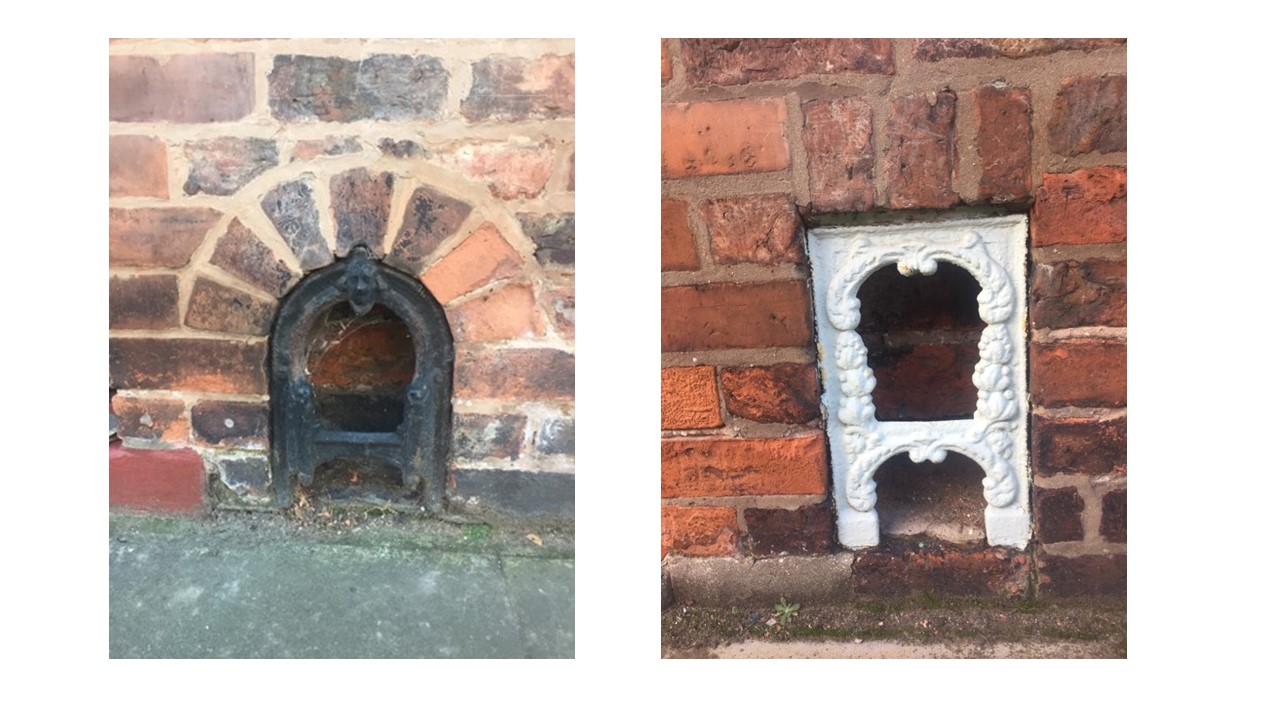
It must have been a familiar sound in the working class streets of British cities;
the scraping of a workman's boots on the cast iron fender nestled into the front of his house.
This will have been part of an audio-symphony associated with the return home of a traditional patriarchal breadwinner- perhaps a cough at the end of the road to clear out the grime and dust from manual processes, a groan as an arthritic leg is drawn over the crossbar of a trusted pedal cycle and the creak of stiff and cold limbs as there is a straightening up in readiness of a welcome at the door from loved ones.
Below is a selection of the fronts of just one terraced street in York in the North of England.
The city had a range of thriving heavy industries as well as the well known association with chocolates as in Terry's and Rowntrees.
The terraced houses front directly to the pavement. There are quite a few different ways of dealing with the hole in the wall as the boot scraper has become obsolete with changes in working practices and the industrial base of the country generally
| Mortar and brick fill - Neater shaped brick - Cricket wicket style |
| Combined airbrick and infill Friday afternoon botch-up |
| Neglected and wet Neatest effort |
| The only two surviving boot scrapers in a street of 100 houses |
Sunday, 10 December 2017
Silent Witness
It is a term likely to offend.
In these times of political
correctness there will be those who feel that "Dumb Waiter" should be rendered
redundant and obsolete.
It of course describes a mechanical contraption, a
scaled down elevator used to transport items of smaller size where these are
required between floor levels in high rise buildings. In its most common form
it sent prepared meals from a commercial kitchen in a restaurant up to a
collection point for staff in the dining room.
I came across a different
version just this week in a four storey residential property in a popular Yorkshire
Coastal Resort.
The grand semi detached building had been built sometime
between 1869 and 1892, a bit vague I appreciate but the two dates represent the
date of conveyance of the land and the first appearance of a footprint of the property
on an Ordnance Survey Sheet respectively.
There is little other information about
the place but the floorplan and layout suggest that it was purpose built as a lodging
house.
In that era the town was a favourite day-trip and seasonal holidaying
venue for the masses from the industrial areas of West and South Yorkshire.
Arriving in the town by steam train or road going charabanc the hordes of visitors would be conveyed or just walk
to their pre-booked accommodation.
In the off season the same rooms would be
occupied by travelling salesmen, company representatives, businessmen and those
partaking in an occasional illicit liaison, the proverbial dirty weekend.
The
dumb waiter in this particular property was well preserved and may even, with a
little attention to the pulleys and runners, have been capable of operation.
On
each of the four floors there was a small boxed compartment. This now found itself
enclosed in a built in cupboard, boarded over or still in two positions
retaining serving hatch sized double doors. It had done well to survive as the
building itself had been altered considerably to its existing but longstanding
arrangement of one self contained flat per floor.
There were no actual
traceable records to confirm actual lodging house use but the clues were there.
The staircasing serving all floors was right in the centre of the building, a
stone built rather than a timber tread and riser type. This would have been constructed
to provide a sturdy and fireproof access.
The four flats were of decent sized
rooms, each off a series of lobbies rather than a smoothly interconnecting
domestic set-up.
The sanitary accommodation was in the form of separate WC’s
and across the hallways a bathtub and wash handbasin.
This was certainly not a
single house that had been sub divided but an intentional design for multiple
occupation.
The street in which the property stands was, according to Bulmers
Directory of 1890, predominantly of lodging houses, the Proprietor always being
a named woman no doubt with a fearsome reputation for keeping a morally strict
establishment in spite of the often saucy and racy associations of a resort
town landlady.
The dumb waiter will have had its lift shaft rooted in a ground
floor kitchen from which the room occupants could place an order for their
meals. Nowadays we would probably self-cater from a small kitchenette but in
the halcyon days of the lodging house there would be no encouragement or indeed
inclination for the guests to cook for themselves.
Full Board, meaning that all
main meals were included in the tariff, would be the order of the day.
The
retro-fitting of a shaft for a dumb waiter would involve prohibitive cost
notwithstanding the disturbance to the fabric of the building so I can conclude again that this discovered gem was part of the original architectural
brief.
Until the 1920's and the introduction of electric motors the dumb waiter
will have been manually operated by a staff member pulling on a rope or chains
to propel the wooden or metal box within its frame.
Some versions had a
speaking tube alongside the doors on each floor to communicate information
between the supplier and the recipient.
Although only small enough to take
perhaps a tea tray with two dinner plates or a pot of tea and cakes the use of a dumb waiter for illegal
or nefarious purposes was a popular literary and dramatic ruse.
Whether for
escape, concealment, to get rid of evidence or even dispose of a body (or its parts) the dumb
waiter maintains a reputation for mystery and excitement.
Personally I declined
the invitation to prise open the shaft doors to take a peek inside and I feel that
I had good reason to do so in the circumstances.
Subscribe to:
Posts (Atom)