Wednesday, 11 October 2023

The Money Go Round- Hull Fair

I gave in to a stereotypical middle aged geek urge to try to calculate the hourly income generation of Hull Fair.


This was written a couple of years ago now and so some of the prices for rides and nosh might have shown a small increase with inflationary pressures- especially the novelty balloons.

This is my calculation based on guesstimate, prejudice, inappropriate stock judgements and not a very detailed knowledge of the economics of a very large, slick and efficient commercial enterprise.

I divided up the Fair into broad groups based on form and function.

This covers the multi-million pound Mega Rides right down to the individual hawker with a fistful of helium balloons.

I then estimated the average spend of a visitor to each category, how many visitors could be served at a time and how many times the transaction could be done per hour.

For example, Bob Carvers Chip Emporium has about 15 servers who could turn around a punter every two minutes from order to payment therefore 30 per hour at an average spend of £7.40 assuming 2 portions of pattie, chips and peas.


I applied this across the full range even down to Eva Petulengro Fortune Teller and stalker of Coronation  Street Stars who can, I guess, throw considerable uncertainty into the ongoing lives of 6 people per hour for £5 a go.

The full calculation is as follows;

Fast Food Concessions.
Average take £3, 5 servings at a time, 2 minutes duration, 30 per hour, 50 stalls

Fortune Tellers.
Average take £5, 1 at a time but with 5 caravan based clairvoyants, 10 minutes consultation, so 6 per hour.

Major Rides.
£2.50 average fare, 25 per ride, 12 revolutions, cycles or inversions per hour, 20 such high tech marvels of inertia and motion.

Traditional side stalls.
£1.50 per chuck, launch, shot, hook a duck, 10 people at a time, 2 minutes of adrenaline soaked enjoyment, 30 per hour across 40 very similar stalls with this years top promotion of Meerkats.
Special category for dart throwing stalls.£1.50 , 10 men, 2 minutes including a cigarette, 30 per hour, 20 anachronistic and chauvinistic booth operators.

Bob Carvers, carried over from the illustrative section above.

Children's rides.
£1 fare from grandma's purse. 20 per ride unless the toy cars have not yet been dettol'd so allow for 75% occupancy, 12 sessions per hour, I reckon about 10 old style rides just surviving the high tech expectations of the under-5's.

Amusements/slots/falls.
£2 average spend, a lot of 2p's, 50 punters per arcade, disillusionment kicks in with fresh blood every 5 minutes, 5 arcades all possibly operated by the same company.

One-off specials.
Difficult to see how these actually pay the operators. Cost of £10 per person, teamed up possibly with a perfect stranger to be elastic-launched no-where and be photographed of how you would look faced with the your worst nightmare or entering the Big Brother House. 10 minute set up and ride time so only 5 boings per hour. Possibly 2 of these ridiculous pieces of showboating equipment.

Traditional stalls selling candy floss, toffee apples, liquorice whips.
Average spend £2, well staffed so 10 people served at a time, 2 minutes customer interface time, 30 similar stalls but strong representation from Wrights of Brighouse.

Hawkers
Vendors of balloons, light-up hats, battery operated pets in baskets, whistles reminiscent of childhood Punch and Judy but cringingly annoying after 5 seconds. £3 per spend, 12 sales per hour with 30 high viz vested sellers.

I think that I have covered all income generating areas but if you can think of any more please fill in the dotted lines and carry over to my gross figure....................................................................................
..........................................................................................................................................................

As the Americans always say incorrectly ' Now for the math'.

My hourly gross figure working through my calculations comes to £105,420 per hour for the peak evening sessions from 7pm to closing time.

This produces a global gross figure for the peak hours and over the 8 nights of the Fair of £3,373,440.

Making allowances for bad weather, exceptionally fine weather and those afraid of the dark who only attend in the daylight hours there is considerable scope for fluctuations in figures.


There are of course significant costs to be offset against this figure which I, no doubt, will ponder in the wee small waking hours of the next week or so.

Friday, 29 September 2023

Sycamore Gap remembered

I wrote this back in 2017 in praise of the greatest trees in the world. It is highly disappointing that I now have to reproduce it In Memoriam for the completely senseless felling of the Sycamore on Hadrians Wall in Northumberland, UK.

Voting started yesterday for the 2017 European Tree of the Year with 16 nominated for the shortlist. They are all magnificent examples of their species, of great age and character and with many stories to tell of what they have silently witnessed over the ages. Here are the contenders in no particular order of preference.


The Brimmon oak: pedunculate oak (Quercus robur), over 500 years old, Newtown, Powys, Wales, UK. A new bypass was ‘bent’ to save this ancient pollarded oak known as ‘the Brimmon oak’. It has been cared for by one family for generations – they even have wedding photographs from 1901 that were taken under its canopy. But in 2015 it was threatened by a new bypass. Mervyn Jones, who farms the land, campaigned hard to save the tree with ‘tree hunter’ Rob McBride and following a 5,000-signature petition to the Welsh Assembly, the bypass route was adjusted.


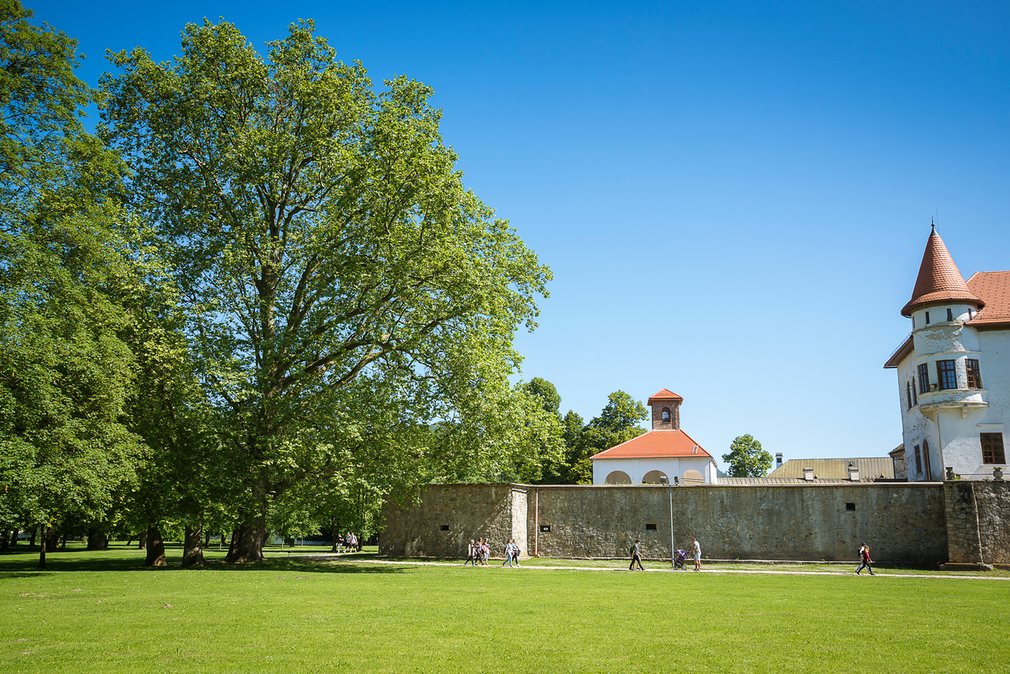
Plane tree from Budatin: plane tree (Platanus hispanica), 270 years old, Žilina, North Slovakia. A London plane is the largest of two plane trees in the Castle park, which was founded during the reign of Count Ján Suňog in 1745 when his head gardener was Ján František Roder from Silesia. Near the large healthy tree grows another plane, that is smaller and sickly. The two plane trees grow together as two different brothers, their roots are inextricably bound.


The ‘ding dong’ tree: copper beech (Fagus sylvatica f. purpurea), about 30 years old, Prestonpans, Scotland, UK. Beloved by generations of pupils at Prestonpans Primary, the tree gets its name from a game invented by pupils who compete to touch its trunk shouting ‘ding dong!’ Its protecting canopy makes it an ideal outdoor classroom, and it brings particular calm to children with complex emotions. It is also the subject of many science and art projects. The headteacher says this copper beech is so woven into the life and identity of the school it’s almost like having an extra member of staff.


Oak Józef: English oak (Quercus robur), 650 years old, Wiśniowa, Podkarpackie province, Poland. The special history of Oak Józef is linked to the place where it grows. The Mycielski family was so charmed by the beauty of the area that they bought a mansion there that became a cultural and intellectual centre of the region. During the second world war the oak provided shelter for a Jewish family hiding from the Nazis. Also the oak’s image was printed on Polish 100 złoty bills. Today, oak Józef is admired by many visitors and is captured in photos and paintings.


Old Homer: holm oak (Quercus ilex), about 200 years old, Rostrevor, County Down, Northern Ireland, UK. ‘I’m the 200-year-old leaning holm oak near the fairy glen in Rostrevor – now I need support! I’ve been loved by generations of local people; for decades, artists, writers and musicians have been inspired under my evergreen leaves. Charles Dickens, CS Lewis and the young Princess Elizabeth have walked the ground I stand on. Hundreds of children have climbed me or swung from my branches. We’ve all become friends. I hear your voices: you touch my spirit as I reach for the light.’


The Stelmužė oak: common oak (Quercus robur L.), more than 1,000 years old, Stelmužė village, Zarasai district, Utena county, Lithuania. One of Europe’s oldest trees, and a symbol of strength, stands near a 17th-century wooden church built by Latvian masters without the use of a single iron nail. Lithuanians say that a man is ‘as strong as Stelmužė oak’. Tourists enjoy its beauty and rich history of pagan sacrifices under its branches or the skeleton and rifle of a Napoleonic soldier found in its cavity. Its acorns propagate many oaks, preserving this veteran tree‘s genes for years to come.

Hugh O’Flaherty’s trees: Mediterranean palm, Italian cypress, holm oak, stone pine, 25 years old, Killarney, Co. Kerry, Ireland. Killarney native, O’Flaherty helped to save 6,500 lives during the Nazi occupation of Rome. This grove of Mediterranean trees was planted in his honour in the Muckross Arboretum in Killarney national park in June 1994 to commemorate the 50th anniversary of the liberation of Rome. A poem, O’Flaherty’s Trees by Brendan Kennelly was read on that occasion by the poet and now forms the centrepiece plaque at the grove.

Jászai Mari square plane tree (Platanus), 80 years old, Budapest, Hungary. In the heart of the capital, and its people, this giant plane is one of the most visited trees in the country. It is eternalised on innumerable family photos with family members resting in its shade. One of the outstanding figures of Hungarian literature, Miklós Radnóti and his wife, Auntie Fifi often walked their dog and had picnics in the shade of the tree. The area surrounding the plane tree became a park in 1903, and it won the title of ‘number one ornamental garden of Budapest’ in the ‘90s.


Climbing beech in Hoppenrade: European beech (Fagus sylvatica), 175 years old, Hoppenrade, Brandenburg, Germany. In the meadow behind our school stands a large, old beech. It is part of our lives and symbolises strength, cohesion, vitality, faith and the transfer of knowledge. Under her canopy we hold open-air classes and it’s a special place all year round – in the spring we can observe sprouting buds, in the summer it gives shade, in the autumn we kick the sea of leaves, in the winter we build a snowman by the trunk. Pupils and staff alike admire and protect our old beech.


The Céron park saman: rain tree (Albizia saman), 300 years old, Le Prêcheur, Martinique, France. This saman, or rain tree, used to shelter coffee and cacao plantations. It comes from the Habitation Céron park (an old sugar plantation from the 17th century), and is registered as one of the largest trees in the Lesser Antilles. A protective tree, which itself is protected from the weather, it has survived all of the island’s cyclones, as well as the eruption of Mount Pelée volcano in 1902.


Russalka oak: common oak (Quercus robur L.), about 100 years old, Tallinn, Harju county, Estonia. A short distance from the statue of Russalka – erected to commemorate the sinking of this ship with its 178 Estonian and Russian seamen – stands an oak tree with an unusual shape. This spot is a favourite meeting place in Tallinn. When this large oak tree became an obstacle to urban development the local community campaigned to save it. Hopefully, this graceful oak will continue to connect different people and cultures for centuries to come.


The sycamore gap tree: sycamore (Acer pseudoplatanus), several hundred years old, Hadrian’s Wall, Northumberland, England, UK. This is probably the most photographed spot in the whole of Northumberland national park. Here, a sycamore tree grows in a dramatic dip with Hadrian’s Wall rising up either side. The 1991 film Robin Hood: Prince of Thieves, starring Kevin Costner, was filmed here. The tree has been known as The Robin Hood Tree ever since.


The lime tree at Lipka: small-leaved Lime (Tilia cordata), 800 years old, Lipka at Horní Bradlo, Pardubice region, The Czech Republic. This lime tree grows by a road connecting the 13th-century Lipka manor and a former cemetery, now tomb of the manor’s first owners, the Kustoš family. For 800 years the tree has welcomed local people to the world and seen them on their last journey. It is said that 15th-century general Jan Žižka camped under its branches and philosopher Jan Amos Komenský stayed here briefly. It is said that a couple that make love under the tree will share an everlasting love.


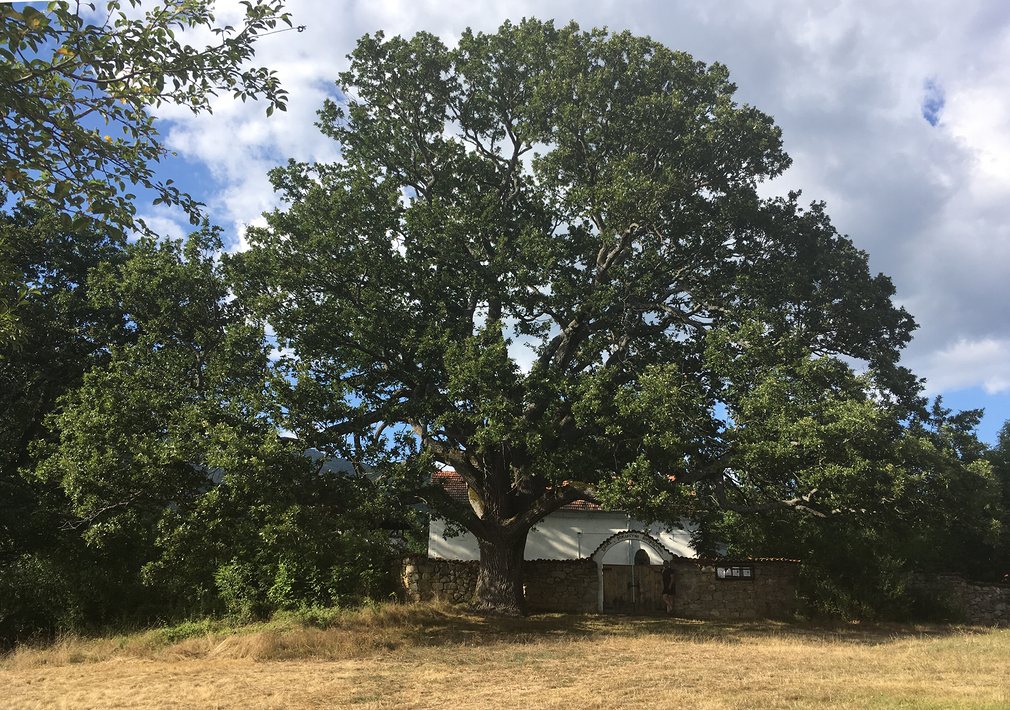
The sessile oak by Nasalevtsi church: sessile oak (Quercus Petrea), over 600 years old, Nasalevtsi village, Tryn Municipality, Bulgaria. This venerable sessile oak grows by the outer wall of the local church of the Nativity of Mary. The place is considered sacred and there was a church here as early as the period of the Second Bulgarian State (12th-14th century). The current church was built in 1859, when people used to make annual sacrificial offerings to saints here to pray for good health, protection from storms, snakes, attacks by invaders, and also for rain.

The Massemen village lime tree : large-Leaved linden (Tilia platyphyllos), 380 to 440 years old, Massemen, East-Flanders, Belgium. This lime tree has been beloved in Massemen for over 400 years, as befits any veteran tree. Its knobbly trunk, hollow inside and leaves speak for themselves. It groaned ‘in fright’ when the village church burned down in 1645, feasted with the lords of Massemen when the village became a princedom and saw French invaders beaten in 1798. The lime tree spreads a delicious perfume and is featured in many paintings. People still fall in love under its canopy.

Aprisquillo pine: black pine (Pinus nigra), over 350 years old, La Adrada (Ávila), Spain. ‘By the stream, among clouds and mountains I find myself. I’m a black pine, although everyone calls me ‘Aprisquillo’. I grew huge, tall, strong and vigorous. I hear you coming and I know you come to see me. You embrace me and give me your hand, you surround me, you sit on my exposed roots, you talk and talk about my dimensions. Together, we remember past stories about fires and plagues which I have suffered. I enjoy in silence and smile. Here, I will be forever, as a guardian, waiting for you.’

Tuesday, 5 September 2023

Formerly known as Pete The Cyclist

It is Tour of Britain Day today and a rare stage in East Yorkshire. I thought it apt to return to this piece of shamelessly nostalgic cycling writing.......

I time travelled yesterday for some 51 minutes and 32 seconds.

That will certainly sound like an outrageous and wholly implausible claim to everyone but hear me out.

It was midday in a local town and I was caught in the worst traffic congestion that I had ever experienced in that place. Rather than just enter the queue and take my chance for perhaps an hour or more in the crawling mass I decided to find a parking space, pay the 60 pence for the next sixty minutes and grab a coffee.

I was sure that this would give enough time for the congestion to sort itself out.

It had been a year or more since I had frequented a cycling themed establishment run by a former cycling acquaintance and as it was the nearest coffee servery to where I had left the car the decision of venue was pretty easy.

Gary and his wife had set up Cafe Velo as a new venture a few years ago now.

 Cafe Velo, Beverley, East Yorkshire
In his youth he had been a very accomplished amateur racing cyclist and the Pro Ranks may have beckoned but at a time in the British scene when the prospect of making a living on the bike was very far away from the present day opportunities in sponsorship and commercial endorsement terms.

In order to make ends meet it was imperative to have a daytime job and race as an amateur.


My time travel was facilitated by Gary in that he knew me from my involvement, way back, in the sport of cycling rather than from anything else that I have done in my 60 years on the planet.

I thought that in the mid 1980's I had offended him mortally by outsprinting him to the line in a competitive sprint.

In my mind it was a glorious moment, one of those rare full gas sprints when you feel immensely strong and almost immortal.

I should clarify that
1) it was not in a race and
2) the line was in fact a road sign marking the boundary of a nearby town and
3) there was a group of us out on a wednesday afternoon ride which inevitably involved a few adversarial manouvres fuelled by a coffee and cake stopover at a popular roadside eatery.

The intervening decades had, in my minds eye, elevated this one incident to the equivalent of a Gold Medal contest at the Olympics, the winning of the final Tour de France Stage on the Champs Elysee or any one of the great European Monuments Races such as Paris Roubaix or Lombardia.

Turns out that my pipping him at the post, so to speak, had earned me the respect of Gary and upon entering his Cafe yesterday afternoon I was transported back to the 1980 as he welcomed me back as he knew me.....Pete the Cyclist.

Don't get me wrong. I would not live my life in any other way to that I have been blessed with but that brief and transient phase of my life has some value and influence on all things that followed.

The conversation covered all of the names of former bike racers and events of that bygone era.

I could not recall some of them as Gary was a significantly more accomplished cyclist than I could ever have hoped for. He competed against all of the great and good such as Boardman, Elliott, Herety, Sherwen, Doyle and many others. I was more in the third and fourth tiers with just one win to my name.

In spite of this vast difference in abilities, skills and successes our participation in that great sport was and continues to be a great and rich seam of memories and anecdotes.

We were so engrossed in our collective recollections that the time passed by effortlessly.

In fact, at the arrival of the 32 seconds past that 51st Minute I had to say my farewells and make a dash to the car before the notoriously keen town centre Parking Enforcement Officer had a chance to enter my details into his notebook.

Yep, hard to believe this was me 36 years ago. Still have that machine

Monday, 28 August 2023

Hull Man to solve UK Housing Crisis (1925)

The current housing shortage crisis in the UK is nothing new. 

It is widely stated by activists and charitable housing organisations that there has been a systematic failure by successive governments over the last 40 years to come up with a committed and adequately funded policy to keep the population housed. 

In fact, the lack of a housing strategy goes back much further. 

There were good and laudable intentions after the First World War in the “Homes for Heroes” initiative and yes, some progressive and sustainable developments were taken through to completion and habitation. 

The actual numbers and locations however fell woefully short against actual need. We have, in this country, been on catch-up ever since. 

A prominent name in the mix to address the national housing shortage in the 1920’s was the Hull based, Robert Greenwood Tarran. 

He had seen a shortage in his home city alone of around 10000 homes and in 1925 he built, on Lorraine Street in the Stoneferry Area of East Hull, a pair of his Tarran build concrete houses for inspection and scrutiny by the Hull Corporation Housing Officials as well as inviting other Authorities and National Institutions. 

Other systems built houses were of course available and around the same time the Ministry of Health had been party to a demonstration of a Lord Weir Steel House. 

Robert Tarran had complete faith and confidence in his reinforced interlocking concrete block or panel method of house construction. 

His biggest obstacle was to persuade the Local Authorities but also the General Public that his methods and materials were as sound and durable as bricks and mortar. 

There was a strong resistance to the idea of anything other than traditional build and Tarran would have to work hard to achieve publicity and interest in his non traditional houses. There were also the equally important factors of cost and speed of building as in the years after the First World War there was a significant shortage of materials and skilled labour 

Tarran demonstrated that his houses could be built in just 28 days and with mainly unskilled labour. The key to his method was the casting of the concrete panels in moulds as a cheap and rapid factory based process. With suitable round iron reinforcement the panels came in 6 feet by 2 foot 9 inch units and with a 3 inch thickness. These were inserted into a timber or metal framework erected on a cast concrete base and under a pre-positioned up and over roof. 

Robert Tarran knew that, in order to win over the preconceived ideas of the authorities and the public, the finished product had to look like a standard house and not like a shed or outbuilding. The external finish was rendered, typically in smooth or pebble dash. Issues of inevitable sweating and condensation in the concrete components were countered by a good ventilation system which was an advancement of its type. 

Tarran was able to give an orthodox appearance to the house, a stable, rigid and weatherproof structure and a conventional floor plan. These attributes meant the houses could be regarded as permanent structures and would therefore be suitable to meet Government Funding Criteria for a 60 year loan. 

Two types were available, both of 3 bedrooms (at a time when older traditional brick houses in Hull were predominantly of just 2 bedrooms) and up to date amenities. The one living room version had a £425 cost in a ready to occupy condition and for £500 a parlour or second living room was available.


Tarran claimed that he could build 1000 of his houses over a 3 to 4 year period and would donate four homes for free to The Great War Trust. 

Housing Experts at that time were of the opinion that Tarran's houses exceeded any previous systems in replicating the expectations and public acceptability of a traditional bricks and mortar dwelling.

As a footnote, Tarran was well ahead of his time in the 1920's and although his company Tarran Industries were also Civil Engineers and prominent in major building projects in Hull in the pre war and inter war era it was not until the 1940's and beyond that his Concrete Houses came into their halcyon era. In all and on a National Basis Tarran built around 19000 houses. 

Tarran variant house types are still standing today but only where significant repair schemes to combat the corrosion and weakening of the metal reinforcement in the concrete panels and framing have been carried out. 


                                                Photograph of a post war era Tarran bungalow

The repatriation of Trump (The Goldfish - not the other)

I wrote this a few years ago now on the subject of the two goldfish that comprise the current official menagerie of our family, (Excluding the local wildlife of squirrels, magpies, pigeons and urban foxes) It is particularly relevant and not a little bit poignant because one of them died and the other is shortly to be repatriated to the Aquarium Shop as we are no longer able to keep him. The reasons are complicated. 

Here goes....

Having written the foregoing I am somewhat ashamed to admit that my two goldfish, constant companions to me in my work-room over the last 3 years remain without any names whatsoever.

I can explain this, partly, in that they were acquired as participants in the Iranian New Year Festival in 2015.

Amongst various symbols of renewal and tradition for Nowruz the fish represented life and creation as they swam around the glass bowl on a ceremonial table. I fully expected our Iranian friend to claim ownership of the fish and take them with him but no. It appears that after the New Year in Iranian Families the symbolic goldfish have served their purpose and just disappear. 

So, a few years further on and they are just behind where I sit at my desk, although in a much larger tank. The bubble and murmur of the filter and pump are hardly noticeable to me now although from time to time the fish flick the surface with their tales to disturb my concentration. This is usually as feeding time approaches or if they require a staring match through the thick glass of the tank which they seem to enjoy doing.

As for giving them names, well, I am pretty close to doing that with the catalyst being something that the pair of them have recently done within the few cubic feet of their environment.

It is only in the last week or so that, unbeknown to me and very much behind my back (actually behind where I sit) they have undertaken a large civil engineering project.

Half of the floor area of the tank is now exposed glass, devoid of any gravel or objects. In a painstakingly slow process by mouth or fin the two fish have created a sloping shelf or underwater beach from the small aggregate stones and pebbles that runs from the middle of the tank all of the way up to the outfall of the pump/filter.

Apparently this behaviour is quite normal for goldfish but in this case normal is not a word I would use.

The creation is geologically and topographically perfect over its 30 degree slope. In addition some sizeable stones which were collected during family holidays and excursions for their unusual shape and texture have been manoeuvred into very natural looking positions within and at the foot of the gradient.

This will have been no small feat given their density and ,what I had thought, immovability. 

I have been so engrossed in my own work that this major redevelopment scheme has gone unnoticed for so long. 

I cannot say which of the fish has assumed the roles of architect, designer, project manager and general labourer although they are very different in size and manner being from two distinct breeds

I can imagine that the larger of the two, a chubby, bossy and belligerent classical Carp shaped fish would be the instigator and the much smaller, delicate and flowing tailed one a bit of a fawning acolyte.

Yes, the fat fish is very bright orange, quite flamboyant and self assured and yet not in possession of the sharpest mind. His companion is subservient but I suspect very clever and a little bit devious in appearing to go along with the whims and fancies of the dominant partner and by doing so getting exactly what it wants.


I can therefore have the naming ceremony here and now.

The pair of fish will henceforth be called Trump and Kush.

There is some satisfaction in having reached this point but I am now a little bit concerned about what the outcome of the further fish tank based activities of Trump and Kush might be- a golf course, a wall or as a launch pad for aggression and mayhem in their own little world...............................................or beyond.

Thursday, 3 August 2023

St Swithin and Soggy shoes

It has been the wettest July in the UK since records were made on such things. As Brits we complain but at the same time do not wish upon ourselves the other weather extreme being visited upon other parts of the world in heatwaves, wild fires, floods and drought. Here's a bit of a musing on water..... 


The following is an edited transcript of a BBC 4 extra radio play that aired some time ago now. The work, entitled "The State of Water" is a drama around a Welsh Hill farming family and the decisions they have to make to conserve the natural water resources on their land. 

The writer, Sarah Woods blends language and emotions with a factual thread which taps into the whole theme of water supplies and security which are becoming a significant consideration across the globe.

"Each of us is made up of 60% of water.

It is in our blood, heart, arteries, veins and capillaries.

It conducts the electrical signals in our brains to allow us to function. Water lubricates our joints, allows eyes to turn in their sockets, dissolves enzymes and hormones and carries amino acids, carbohydrates and minerals, carbon dioxide and electrolytes.

Of the 150 litres that each of us uses every day we drink only 6 litres. Some 50 litres is used in showers and spills from taps. 20 litres run through the washing machine, 45 litres are flushed down the toilet. The rest just drips away as we wash foodstuffs at the sink or brush our teeth.

We rely on water to produce just about everything in our lives.

A single tomato from seed to sandwich filling uses 13 litres of water. A hamburger from grazing pasture to the inside of a sesame seed bun takes 2400 litres. A pair of leather shoes is a consumer of 8000 litres and the production of a car, 400000 litres.

A sip of tea contains 136 drops of Indian water, the equivalent sip of coffee 1100 Brazilian drops. The perfect accompaniment for a roast dinner, potatoes were irrigated in Egypt. A refreshing orange comes from Spain and other citrus fruits from the sun drenched eastern Mediterranean.

Water surrounds particles and puts them in solution.

There are organic compounds from decaying plants, crypto spiridium from animal faeces, pesticides from the fields seep into the water in the absence of filtering peat and soils, slurry leaks into the watercourses and strangles the oxygen which asphyxiates the fish, over-use of fertilisers encourages a poisonous algae bloom, industrial processes leach iron, aluminium, tin, lead and cadmium into the water and this is joined by other toxic waste from car oil to rubbish tips, pollutants from cooling water as it is returned and heavy metals from panel beaters, dentists and university laboratories.

The solution bio-accumulates in our bodies and bones. The contraceptive pill and HRT put oestrogen into the water. Raindrops, thick and heavy with particulates from the burning of fossil fuels absorb Carbon and Nitrogen dioxides resulting in sulphuric and nitric acid. This increases as more rain releases aluminium and metals which kills insects and the wildlife that feed on them.

As the earth warms up ,water vapour fills the air. Summers around the globe and the natural aquifers become drier and as this happens there are greater demands for water.

Glaciers melt which causes problems for the 1 in 6 of the population who rely on meltwater. Sea level rises from glacial melt meaning that saltwater overwhelms freshwater supplies.

Downpours are more severe and concentrated and yet as half of the world suffers from devastating floods, the other withers from punishing drought.

Water is a finite resource and yet we take it for granted. Seagoing tankers take 36 million litres of freshwater from France to 330000 homes in Spain whose residents are in water crisis. 

There is no more and no less of it. We drink the water that our ancestors bathed in .

There is nothing to replace it with when it is gone."

Tuesday, 1 August 2023

Kick it Hard Lily

The second highest career goal scoring record behind Pele is from a much lesser known player whose games were played over the years 1920 to 1951.


Lily Parr's total of over 1000 goals is remarkable enough an achievement but even more so given the turbulence of the times which covered the implications and complications of two world wars, a major economic depression between and the emotive political and social events for the acceptance of women in the male dominated world of just about everything.

The mass and necessary recruitment of women as a labour force to cover for the conscripted male workers into the first world war drew the attention of the Government to the wider health and welfare issues of women. 

A healthy and happy workforce were a productive and less troublesome and potentially militant group.

The Preston, Lancashire based manufacturers Dick, Kerr and Company had been established in 1900 specialising in the tram and light railway sector but switched to essential war work in 1915 making munitions.. 

The factory employed a predominantly female staff on the production lines and within the remit of keeping key workers fit and healthy a football team was formed taking the company name.


Rival industrial and manufacturing companies also former their own teams and around 150 were registered within what became a very competitive league structure. 

The Munitions Cup, played for in 1917, by the Munitionettes as a wider descriptive term for the participating ladies teams was watched by a crowd of 10,000 at the ground of the great mens team of that era, Preston North End. The crowd attending raised £600 for wounded soldiers.

The ladies game was not confined to the war years and by the early 1920's it was well established and experiencing its halcyon days. 

The Dick, Kerr Ladies were prominent and played 60 competitive matches during the 1921 season in front of an aggregate attendance of 900,000. A crowd of 53,000 was present at Goodison Park in Liverpool to watch the Dick, Kerr Ladies beat close rivals St Helens Ladies.

The success and genuine support for the ladies league caused grave concern amongst the crusty old Football League administrators and in a calculated but spiteful move they issued a ban on the use of any League grounds for the playing of ladies matches. 

In their expert evidence to support the ban various medical practitioners were produced to express concern over what dangerous impact playing football could have on fertility and femininity. 

The ban remained in place until 1971.

The Dick, Kerr Ladies continued to flourish and amongst their honours were multiple league titles, International victories including tours to France and the USA and reaching a pinnacle in 1937 becoming World Champions. 

Against the well entrenched establishment and remnants of the austerity of the Victorians which still dominated society and attitudes the team were the first in the women's game to wear shorts. 

Archive photographs of the team resemble a line up of dancing girls, nimble,graceful and lithe but wearing heavy leather football boots and with a bit of a sun tan. The team fell out with the bosses over some undefined 'tut-trouble at factory' and reformed as Preston Ladies until 1965.

The significance of the achievements of the Dick, Kerr Ladies cannot be understated. 

They were brave pioneers at a time when women had no real voice in politics or society. They rose above the petty and what would always be temporary concessions required by the circumstances of the first world war and continued to excel and attract a very good following and fan base through the heady days of the 1920's. 

The names of Lily Parr, Florrie Redford and Alice Kell amongst all of the players have tended to be forgotten apart from dedicated archivists who maintain an excellent web based resource. The stars of the team were inducted into the Football League Hall of Fame but as a gesture it was too late and a bit patronising.

Lily Parr was challenged by a male goalkeeper to try to score a spot-kick past him. He had observed her obvious footballing skill and ability, in particular her reputed very hard shot, but was under the impression that it only looked to be a hard kick in the company of other women team mates. 

Taking up the challenge Lily was seen to smile when the unfortunate chauvinistic keeper was taken off to hospital with a broken arm from the impact of her penalty kick.