Tuesday, 23 January 2018

Scooby Do's and Don'ts

It is often necessary to take a deep breath. 

This can serve to calm the nerves or as a precursor to confronting what could be a difficult or challenging situation in some, as yet, unseen form. 

I am placed in a trustworthy position by being given, on a regular basis in the pursuit of my job, sets of keys by which to gain unaccompanied access to houses, shops , factories and all sorts of properties. 

If the place is empty, as in unoccupied and devoid of furniture then I can look forward to a relatively straightforward inspection. 

However, if I am informed that, typically, a house is lived in but the occupiers are out and happy for me to go in with keys then I adopt the ritual of that deep breath before I push open the front door. 

It can be a case of not really knowing what I may find on the other side. 

A regular problem that I am faced with is to do with domestic pets. 

A conscientious owner occupier is likely to let me know if a pet is in the house and with a special set of instructions to follow. The most common is with an indoor only cat. I am extremely careful not to lose concentration when opening and closing outer doors in case there is a determined escape bid by what is often a timid and pampered feline to find out what the great wide world only previously seen through the windows is all about. 

Dogs present their own special problems. 

A comfortably crated dog is a luxury and I can report that this form of containment and refuge is becoming increasingly common. Being confined behind a wire mesh does not prevent a hound from expressing its displeasure at my apparent trespass into its territory but does give me the chance to do what I have to do and leave without great issues. 

This is in direct contrast to a loose dog shut away in the kitchen or back room. 

Many a time the owners, in giving permission for me to go in unaccompanied have forgotten to mention that a dog is in residence. 

There can be small clues on entering such as a wet doggy odour, a lead hanging on a coat peg in the hallway, squeaky or bouncy balls under foot. 

If I have been walking around the outside of the house then a faithful dog with a protective nature will make its presence known by barking or appearing at a soon steamed up or spittle strewn glazing pane. I can start to develop an understanding straight away by looking friendly and harmless but it may not be until I am in and sniffed at that the animal may be more at ease. 

Houseproud owners often restrict their pet to a small part of the accommodation with the best rooms strictly out of bounds. I may not be aware of this and have, unwittingly, allowed entry to the forbidden zone. 

There is actually nothing funnier than a dog, released from a confined space, having a mad few minutes cavorting about over furniture and carpets which inevitably leaves some traces of paws, claws and hairs. I have on a couple of occasions received a phone late in the day from a homeowner asking if I had let the dog into the lounge at any time in my visit. I usually plead ignorance. 

Two particular dog related incidents are worth a mention. 

The first was just a week or so ago. 

A pug faced cross bred dog, quite a character on first impression was to be found in the back room of a house for which I had keys. It was totally underwhelmed by my intrusion into its small secure environment and looked at me with a bemused and confused look on its face. I had to get past and into another part of the property but it did not move a muscle. 

This lulled me into a false sense of well being and on returning to the back room the dog was nowhere to be seen. It had disappeared from view. 

It took me twenty minutes to eventually find it upstairs, nestled amongst discarded clothing under a bed. It took about the same amount of time to coax it back downstairs using a handful of doggy biscuits that I had found in a kitchen cupboard. It was an exhausting experience and I was grateful to finally lock up and leave that house behind. 

The second incident was a total embarrassment. 

Having introduced myself to the homeowner I started my external inspection and pressed the thumb latch to a side gate to make my way to the back garden. 

The large dog that shot out through my legs must have been waiting for that opportunity, quietly and cleverly. It reminded me, some time later of the old joke that the dog must have been to metalwork classes as it had made a bolt for the gate. 

The escaping dog was closely followed by a now irate homeowner. 

I stood aside only to be confronted by the man who in no uncertain terms insisted that as it was my fault that the dog had absconded I was required to go after it and catch it. 

I had no option but to take on the challenge. 

I spied a happily wagging tail as it made its way up the street. 

The dog was obviously a regular escapee with a set programme of places to visit in the locality, whether to visit other dogs or just to spread its spore in a bid to increase its territory. 

I set off in the same direction hoping for a swift capture but it was not to be the case. 

In the proceeding hour I must have been in and out of every garden in the road. 

The Neighbourhood Watch must have had a field day watching my very suspicious movements. 

On a few occasions I got quite close to the dog as it became cornered in the right angled recess where a conservatory abutted a house wall, on rough ground at the back of a garage, in a bamboo hot tub enclosure, drinking out of a pedestal bird bath, taking a wee in a vegetable patch (the dog-not me), under a childs’ climbing frame, as it ate up something squashed under a wheely bin, menaced a cat under a parked car, lay down panting in a shady gazebo and finally had success when it simply came up to me and licked my hand as if to say "thank you" for the exercise. 

That small show of canine gratitude was actually quite nice as the dog's owner on taking receipt of the hound was still in a sour, grumpy mood and made no attempt at even a grudging acknowledgement of my intrepid efforts. 

Monday, 22 January 2018

Whistle Blower

I always have a tune in my head.

As far as my family are concerned that is not the problem.

Their sometimes very audible and visual annoyance manifests itself when that tune escapes into the open in the form of a loud hum or a high pitched whistling.

I have been doing it for so long that I do not realise that I am doing it. Others have noticed.

My mother in law enquired whether it was a symptom of stress.

Our longstanding former neighbours (we were the ones who moved) told my wife that they really missed the sound of my humming repertoire which they had gotten used to over 17 or so years. I am not sure whether they were a captive audience through the old solid brick party walls or when I was out and about in the garden or on the driveway.

When I lived with my parents in my late teens and early twenties they knew when I was back in the street after a late night out from the increasing approach of a whistled tune.

I cannot actually say why I do it.

I do have a musical background having the dubious distinction of being the longest serving 3rd row cornet ( a small member of the trumpet family)  in the town brass band. That may not sound too bad, at least I was in the band, but given that 3rd cornet was the kindergarten starter level it was a bit embarrassing that I was still there at the age of 15. Those players in the best seats in front of me had an average age of about 12.

Don't get me wrong I did value my time in Brass Banding having followed in the illustrious footsteps of my Grandad Dick and did participate in some memorable concerts and competitions all over the country or at least north of Birmingham. I dine out a bit on having performed on the stage at De Montfort Hall in Leicester in the wake, albeit a decade or so, of Led Zeppelin and a few years before I went to see Wham do a gig there. Some may be impressed by that sort of distant rubbing shoulders with the greats, well, at least Led Zep.

My humming and whistling can sometimes be triggered off by catching a few notes or bars of a tune on a radio or from a record player or boom box in proximity. I may just mimic the overheard phrase without really recognising the tune in its entirety but will relentlessly repeat it , to the horror of my wife and children. This usually, after a long period, leads to the identification of the tune, song or ditty or failing that someone will just shout out what they think it is in the hope that I will shut up.

It can be frustrating to have a tune buzzing around in my head but alone or with the reluctant assistance of others the source will eventually be discovered.

I was therefore thrilled to see, recently, a media article on a scientific basis to my own endeavours in hum and whistle.

In the 1940's two Stateside authors, Barlow and Morganstern published a book to help with the agonising process of identifying a song. In order to identify an unknown tune their method was to transpose the mystery tune into the key of 'C'. This allowed the actual notes to be written down and then the sequence of letters could be looked up against those listed in the book.

This was a revolutionary approach but did require the searcher to have a good deal of musical knowledge which raises the question of why the tune was a mystery in the first place.

There was scope to improve the science but it took until the 1970's for a Mr Denys Parsons to come up with a workable version and one, crucially, that did not require any musical knowledge at all.

Taking an exasperating tune there was no need to write any notation down. All it took was to recognise whether, over the first few notes starting with the second note, the pattern was higher, lower or the same. Using the letters 'U' for up, 'D' for down and 'R' for repeat Parsons found that after only 16 notes it was possible to distinguish more than 10,000 classical themes and that most popular songs could be named in only 9 notes or less.

A perfect illustration is the ever popular "Happy Birthday", which comes out as '*RUDUD DRUDU DDR" where * denotes the first note. The gaps between the letter sequences do not have any musical significance but just make for easier reading.

All of Parson's theory and practice was published in 1975 in his work entitled "The Directory of Tunes and Musical Themes". His hawking round to publishers had been unsuccessful with many sceptics in the professional ranks until taken up by Spencer Brown and Co.

The main section of the book has sections listing the sequences of classical and popular tunes and with a further section on National Anthems up until the date of publication.

The extensive piece of work is now out of print but copies have changed hands for upwards of £100.

Parsons dedication to the project did indicate some common opening phrases across music history.

 "*UU" is the most popular opening used in nearly a quarter of songs which is remarkable over around 400 years of music composition and with "*DR" being scarcely used at all at 2%.

Parsons did show persistence and ingenuity in his discoveries and revelations although in today's digital age that pesky and annoying hum or whistle can simply be fed into an algorithm based App or bit of software for instant relief.

How boring is that......family, keep back, what!......"*UUUUUUUDDDDUUUUURRRRRR"

Sunday, 21 January 2018

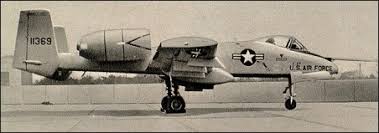
Sky Shakers

The skill of the pilots in hedgehopping through the rural landscape of East Yorkshire was to be admired. 

It used to be every Tuesday that the United States Air Force had a block booking to use the offshore live firing range at RAF Cowden, just to the south of the genteel coastal town of Hornsea. 

The quiet atmosphere of field and shoreline could be shattered in an instant by the staccato peppering sound of the huge 30mm rotating cannon nestled into the nose of the Fairchild Republic A-10 Thunderbolt or as it is perhaps better known because of its rather ungainly appearance- the Warthog. 


Of course, I was always on the lookout on the second day of the working week for a fleeting glimpse of these distinctive aircraft, usually hanging about in pairs and even if not actually seen in flight you could not fail to hear, over a 5 mile or so catchment that gut-rumbling sound of that Gatling Gun. 

I have always been drawn to aeroplanes and from an early age could identify most military types. 

It helped growing up within a few fields of RAF Abingdon and then, after a family house move, on the regular flightpath of Lightnings, Vulcans and Phantoms as they made their way back to their home bases in Lincolnshire. 

I could appreciate the graceful lines of the jet fighters and Delta Wing Bombers and even farther back from watching countless wartime movies featuring the graceful and slender Spitfires and the chunkier but nevertheless beautiful Hurricanes. 

Even in the 1970’s the neighbours would show a mixture of amusement and bewilderment when my younger self would shoot out into the garden shouting about Lancaster bombers for no apparent sense or reason. Somewhere deep down I had picked up that unique sound of four Rolls Royce aero engines and sure enough within a few seconds there would be the ultimate treat of a fly past by the sole surviving airworthy example in the UK on its way back from a display or commemorative event. 

So why was I drawn to the Warthog- without doubt the ugliest plane in existence? 


I suppose it was because at its introduction in 1972 (when I was aged 9) it was one of the first committee rather than purist designed craft, intended to serve a role of agile, low level flying and specifically to try to counter the potentially overwhelming threat to Western Europe by the massed tanks of the Soviet Union. 

It was widely thought by strategists that in the Cold War Era a determined offensive by Communist armour could overrun the multinational defenders in a matter of days. 

The Warthog was a flying platform for up to eight tons of weapons which explained the stubby straight wings. The two General Electric TF34-100 turbofan engines were mounted above and at the rear of the fuselage intentionally to avoid being damaged by debris thrown up during flying. Being positioned slightly upturned the exhaust gases could fool a ground launched heat seeking missile . 

The GAU-8/A cannon was a bit of a throwback to the old single engine fighter weaponry although in the black and white era these were synchronised to fire through the propeller. The 19 foot long cannon fired at 4000 rounds a minute although the pilots were taught to be sparing with the ammunition and would adopt a tactic of just letting loose 50 to 60 rounds in a one second only squeeze of the trigger. 

With this payload came a lower combat speed of 433mph at 5000 feet when carrying bombs and a slightly faster 440mph in low level, unladen mode. 

To offset the risk of being a slow moving target for enemy ground forces the pilot of the Warthog was cocooned in a titanium armoured surround along with the vital instrumentation including the head up display. Power lines and flying controls were duplicated on each side of the fuselage in case of direct damage and such was the stubborn versatility that if automated systems were lost the pilot could still revert to manual controls. Another design characteristic was the ability to operate on short or makeshift runways. 

All pretty high tec for the early 1970’s. 

Of the 713 built,  some 350 are still in existence today although at the high cost of many revisions. 

Boeing took on the contract for a wing replacement programme in 2007 but to date only just over half of the A-10’s have had the work completed. This has placed the remainder of the Warthogs at risk of being permanently grounded and out of service. 

I have not seen or heard an A-10 for some years now as they no longer frequent the coastal range in my area, not on a Tuesday or any other day. 

I do not hold out much hope of seeing them pop their ugly profiles out from the cover of the East Yorkshire countryside any day soon.


(Source; Speed and Power Magazine Issue 86, November 1975)

Saturday, 20 January 2018

Earth Movers

All that was left was a framed and autographed photo of the Hollywood Star Nicholas Cage, a plastic replica Wehrmacht hand grenade and a drinks mat endorsed by the film crew of Captain Corelli's Mandolin.

We had been starstruck by the novel and film of the book of Captain Corelli's Mandolin and in pursuit of something or other we had set off to holiday on the island of Kefalonia, to the west of the Greek mainland.

The settings for the key scenes of the film could not be found apart from the main geographical and physical topography of the island. All the buildings in the film had been fabricated from wood with a stone-effect exterior moulded from Plaster of Paris and, if surviving the many nautical miles in transport, were now probably stored in a studio warehouse in California.

The reason for this high level of simulation was that the island had been devastated by a massive earthquake in the 1950's and the classical Venetian influenced buildings of the main city, Argostoli and the main provincial towns had been lost in the main tremor, rattled to dust in the aftershocks or demolished on the grounds of instability and a hazard to the public.

Up on the hillsides we had seen hundreds of abandoned villas and farmhouses which were not cost effective or legally permissible to remove and lesser structures including garden and retaining walls were ripped and scarred by the ravages of the earthquake.

We, in the UK , are truly fortunate not to be in one of the volatile tectonic regions of the world as there is nothing like an earthquake to set you back a few years in the pursuit of a normal life.

The events of the early hours tremor of February 27th 2008 therefore created absolute terror and a great sense of humility when it rocked our corner of East Yorkshire.

Eldest daughter pre-empted the actual sustained vibration of the quake, measured at 5.2 on the Richter Scale , by screaming out "Errrrrrrrrrrrrrttttttthhhhhhhhqwwwwwwwwaaaayyyyyyyyykkkkkkkkke" just seconds before the rest of the family were shaken out of our beds.

 I have no idea how she sensed that the earth was shifting but you do hear of such things as an eerie silence, the barking of dogs or the flight of wild birds as constituting a natural alert in such circumstances.

I think that she was already in our bedroom when the sounds and sensations were experienced, being totally alien to UK inhabitants, but very familiar through graphic TV reports from around the world, disaster movies and, from a family visit to The British Museum, where they had a Japanese Earthquake Experience consisting of a gyrating hydraulic platform to attempt to simulate a lesser tremor from the 1995 Kobe City event.

The strange noise lasted about 30 seconds and the impact was akin to having your seat back kicked in by unruly kids in a cinema, dramatic but persistently annoying.

Then, immediately after, just a perfect silence if you discounted the cacophony of domestic security alarms going off in the neighbourhood.

First thing in a Civil Emergency situation is to switch on to local radio. The graveyard shift presenter was already receiving calls about the shaking although from the diplomatic tone of his voice you could tell he was quite used to receiving crank based calls from drunks at about the same time every day on similar earth-moving topics.

Gradually the news machine took on the story and by the 8am TV news there were eye witness accounts of chimney pots falling to the street, cracks appearing in walls and ceilings and a few incidences of structural weakness causing concern to the Borough Engineers.

I could see no tangible worsening of my own collection of masonry and plaster cracks over which I conducted regular monitoring on a casual interest basis.

Over the following weeks I did get commissioned to advise on a few cases of earthquake damage from concerned homeowners.

These did start to form a distinct pattern.

The western side of the Hull urban area where becoming elevated above the floodplain has a chalk strata. The quake, whose epicentre was some 40 miles south in rural Lincolnshire, had potential to rock and jar the chalk causing damage as opposed to the induced jelly wobble of the clay based soils further east.

Any old Victorian plasterwork, the dry horsehair bonded type forced onto willow latts, was particularly vulnerable from working loose and my analysis attributed two large ceiling collapses and associated damage directly to the earthquake rather than just being age related or poor maintenance led wear and tear or heavy handed paper-stripping by enthusiastic DIY'ers.

The strangest incident was in an older house just to the north of Hull city centre. The owners, a nice elderly couple had splashed out on new fitted carpets for the staircase, landing and front bedroom and these had been put in place professionally just two days before the quake date.

They then went away for a weeks stay-away with relatives.

On their subsequent return to the house, an end of terrace two-up, two-down example, they discovered that there had developed a uniform gap of two centimetres between the inner face of the gable end wall and the new carpets for the full length of the wall. Sighting in line along the gable wall did indicate a very slight bellying and slumping just at corresponding first floor level.

In the absence of any mitigating factors the homeowners were successful in their insurance claim for damage arising from an earthquake and inspite of strong resistance from their insurers to accept that, in the UK, such a peril could actually be experienced.

We should be thankful.

Friday, 19 January 2018

Smooth or Crunchy?

As parents you try to do the best for your kids.

It can be difficult alongside that quest to achieve the perfect life balance of work and family which from my own experience is a bit of a modern myth like increased leisure time and a paperless office.

When starting a family of your own you should not underestimate the impact of facing situations and challenges in child rearing that are new and also a little bit frightening.

The first born is always firmly swaddled and protected against any germs, draughts, wayward bugs and particles of dust and it is not until you drop them for the first time, wholly accidentally and without harm, that you begin to relax a little bit and become a better parent for it.

The second child, or in our case the middle child, benefits from the amassing of knowledge from the earlier arrival and things are less fraught and riddled with angst and stress.

By the time the third arrives on the scene why not just go for it!

There is an overwhelming sense of confidence, maturity and well being.

So, there we found ourselves in our late twenties and as early thirty somethings with a larger than post-nuclear sized family unit.

That took a bit of gearing up in terms of financial income, housing provision and mode of transport but we managed it thanks to a multitude of blessings and the support of those around us.

We also had the luxury of plenty of time to devote to our three children from simple playing and reading to going out to interesting places and sampling different lifestyles and cultures.

Of course we could not think about anything like an overseas holiday until some years in the future as costs aside we could not work out the logistics required to do this successfully.

There were plenty of UK destinations for us from a beachside caravan to a lochside cottage, a borrowed house to a log cabin.

I forgot to mention that we also had two dogs, in fact they predated the arrival of children and on reflection were ideal training for their subsequent arrival. Many a time we would find a coagulated single entity curled up asleep on the living room floor comprising two dogs bodies and small infants in perfect harmonious existence- until that is we discovered that worms are easily passed from canines to humans. That sort of infestation is only really trumped in parental shock by the presence of hair lice.

Schooling was good for the developmental skills of our three and they were in the system from a very early age with a local pre-school play group.

Evenings and weekends were taken up with driving to and from the usual activities of ballet practice, brownies, friends' parties and functions but all character forming and therefore well worth the effort as parents to get them suitably clothed, equipped and on time at each of these.

We were not disappointed or disillusioned as one by one our children did not settle into these traditional activities as we could see that they were finding their own way in the world.

Looking back now those years were on a constant fast forward pace and it was not long before our three were teenagers and then into their twenties.

We do get some occasional feedback, or as I call it customer ratings, from them which is heartwarming.

Perhaps we could have done things differently and better but our three have become good citizens with a social conscience and sense of justice which suggests that we ticked a few boxes in the upbringing discipline. That sounds like they are conformists and a bit dull but nothing could be further from the truth than that.

Then, just as you feel a congratulatory self slap on the back is in order there was the shattering revelation, just this week, by our middle child.

It came in a dreaded text message, that purveyor of glad and ill tidings.

It turns out that middle child had just found out about the indulgent delights, at the age of 26 ,of eating peanut butter straight from the jar with a spoon.

I cannot explain how this rite of passage was omitted from her developmental years.

As parents we must have taken our collective eye off this fundamental life affirming experience, one  of the joys of childhood.

Can we ever be forgiven for this lack of care, dereliction of duty and negligence?

We just hope so.

Thursday, 18 January 2018

Larks and Recreation

The all white ,unblemished van, excepting the logo of the Local Authority, sped past my line of vision at the roundabout junction.

I did not catch sight of who was sitting up front but upon reading the small print below the logo of  "Play Area Inspection Team" I half expected to have seen two burly employees wearing clown suits or at least with their faces blathered and stained with the coloured pigment from high sugar content Chupa-Chups lollies.

A jolly single balloon on a string flapping around the back doors of the van would also have been a nice and fitting touch.

I can appreciate the need for such a service having experienced some frightful recreation grounds, public parks and play areas during my most attentive parenting period with the children when they were very young.

The graffiti covered climbing frames, swings, roundabouts and see-saws were a testament to poor attention to spelling although the general gist of who was willing to do what to whom and for how much was quite clear and unambiguous. It took some very vague and non-committal explaining to distract curious young minds.

The surrounding area was also a minefield of discarded lager cans, shattered cider bottles, crisp packets and confectionery wrappers. It was a relief to find that alcoholism had taken over as a career ambition from that horrible nicotine drugged smoking lark amongst the local teenagers.

I challenge anyone to deny that their local recreation ground figured highly in their courting habits.

The current trend appears to be as a sordid venue for sexual exploits given the amount of prophylactics adorning the place like stalactites.

I was understandably shocked to read in the local newspaper that my local Reccy was a major market place for drug dealing.

So, in summary the play areas of today accommodate everything apart from being a venue for actual play.

A posh housing development in a nearby commuter village boasted in it's marketing literature that it featured a fenced children's play area. Not so much a philanthropic gesture as a means of securing concessions from the Planning Authority  in terms of a higher volume of housing, euphemistically termed Planning Gain. The development was in high demand and a good number of off-plan and pre-sales were agreed with a handshake and a non refundable deposit.

Unfortunately, under the due diligence of lawyers acting for individual purchasers, the open ended liability for any injury or worse arising from use of the play area would leave all the residents jointly and severally responsible for any civil actions and damages arising. Clients were advised to pull out on the basis of the nightmare scenario. Panic ensued, money and jobs were on the line for the developer.

The Council stepped in and took over the playground.

Peace, tranquility and order were restored to the universe.

My own childhood memories of play areas are reinforced by a few persistent scars on knees, elbows and face. They were rough and tough areas.

Use of a particular item of equipment was strictly on a first come, biggest kid or most scary mum basis.

There were frequent injuries and maimings for those who unwittingly or intentionally wandered into the reach of an occupied and high impact swing, on either the forward sweep or the back-climb.

Trying to get onto a high speed roundabout, without any comprehension of physics, momentum or understanding of giroscopic motion was foolish but a challenge.

Use of the stainless steel slide could be sticky and slow or unbelievably fast and this could vary very much on a visit to visit basis. Who could predict what would happen?

The see-saw was equally hazardous and many a spinal column injury , snapped collar bone or skull fracture was indeed an expectation of play.

My wife had a problematic tustle with a piece of play equipment as a young child with a consequence being that one of her eyeballs popped out of its socket.

I hospitalised my younger sister in exercising a dramatic dismount of a see saw.

Many a time a playmate cascaded through an array of monkey bars like a ball bearing through a pin ball machine.

In all circumstances, barring paralysis and coma , we just picked ourselves up, I usually cried a bit, tied  a clean handkerchief onto any abrasions or blooded areas and moved on to the next apparatus, if it had suddenly become free.

My last supervision at a Community Play Area emphasised the impact of a health and safety culture.

The surfaces under what remained of the apparatus were in a soft rubberised matting.

Anything that swung, propelled, slid or elevated had been removed and replaced with a spring mounted caterpillar figure that rocked back and forth and variations on that sort of movement. That was it.

I have observed a welcome return to activity based play in more recent years with basketball courts, skateboard areas, 5 a side football  and all-weather sports pitches but the spirit of unrestricted play has been lost for ever.

I expect the main role of the "Play Area Inspection Team" is to sit menacingly in their van and discourage any children from coming anywhere near the play area.

Wednesday, 17 January 2018

Big

I wrote this exactly 6 years ago to the day. Thought it might need another airing...............

It was a phone call that I received 'Hands Free' in the car that caused me to contemplate a new unit of measurement for the 21st Century.

The duration of the call was certainly a few minutes and I sort of went onto automatic pilot as far as steering, pushing the pedals, changing gear and indicating were concerned.

The shocking realisation was the actual linear distance that I had travelled.

I simply cannot remember how I got from my position at the commencement of the call to the location I found myself in at its end. I would like to apply the term 'mobimetre' to this phenomena of distance travelled, but with no comprehension of how, during a mobile telephone conversation. I can already see the media furore for the first reporting of a fatality under the new unit of measurement as a 'mobi-killer-metre'.

This new unit would sit nicely with what is termed The English Customary Systems of measurement for length and distance although these are based on the dimensions and conventions of the human body from well back in the mists of time.

The imperial unit of an inch relates to the width of a thumb.

The term digit is approximately 0.75 inches and can be gauged by the width of a finger.

A nail is the distance between the 2 joints on the middle finger or equivalent to 3 digits, therefore 2.25 inches.

In natural progression the palm is a measurement of 3 inches and a hand at 4 inches.

Not content with small dimensions in a rapidly developing economy and market place the hand based units were expanded and in a more animated and expressive way producing the rather double-entendre of a shaftment consisting of the width of a hand and up to an outstretched thumb equivalent to 2 palms or 6 inches, the term span being the width of an outstretched hand and the popular builders measure of a cubit equating to a forearm length.

Beyond the cubit is the yard which is taken as the distance from the tip of the nose to the end of the middle finger of the outstretched hand.

Not to exclude the nautical fraternity is the length of an full arm span from fingertip to fingertip at a Fathom or 6 feet. I can envisage some poor ships crew member being dangled over the side and encouraged to take on the shape of a star to ascertain the available depth to cater for the draft of the vessel.

There will certainly have been a great laying on of hands and limbs in the process of early business using the body originated dimensions but what allowances were made for the improved health, vitality and bodily dimensions of successive generations?

A good example of changes in body shapes and sizes is illustrated in the definition of a foot.

The modern unit is of course 12 inches but with some variation from the Roman foot of 11.65" which persisted through to the Anglo Saxon invasions of England. The Germanic tribes brought their own scale of size with the foot increasing to 13.2 inches but this was superseded by the late 13th Century with a bit of a compromise but establishing the standard measurement at 12" which persists to today.

The early forms of measurement must have seemed like pioneering science at the time with practitioners amongst the architects and engineers of the pre-history and later civilisations being held, understandably, in great esteem.

In my early years of Surveying the older members of the profession who trained me up did use measuring sticks in their daily workload or could accurately pace out a field or garden boundary to within a very close tolerance to a tape measure and over some distance.

The unit of a pace was a mainstay of the Roman Empire being one full stride or two steps.

The Roman Mile was a walked distance of 1000 paces. I would question the accuracy of this on the basis of the intricacies of the method of counting which towards the latter stages of the mile must have been a slow process of much muttering of 'CMXCV, CMXCVI, CMXCVII, CMXCVIII, CMXCVIX followed by a very satisfied M or even a self congratulatory MMMMMMMMMM!

The historic and iconic origins of the English Customary Systems of measurement are one of the main attractions and worthy of defending against all-comers. The imposition of the metric system failed in this country because it is based on a cold and emotionless set of principles.

Measurement in the metric unit does require a ruler or tape measure when we are otherwise physically equipped and able to apply the imperial measurements simply by sticking up two fingers, the middle finger and a palm or looking down our noses and finger pointing at those wanting to know how big it is or how far there is to go.