We are currently living in strange and unprecedented times and yet if you delve back into history the wise words of others always seem to have a perfect relevance and resonance for us now.
The following are a selection of the words of the Roman Poet, Ovid who was born in 43BC.
They were also tumultuous times with the assassination of Julius Caesar and the great upheaval and civil strife in the Roman Empire.
I have taken some encouragement from the words of Ovid
“Dripping water hollows out stone, not through force but through persistence.”
“Perfer et obdura, dolor hic tibi proderit olim. Be patient and tough; someday this pain will be useful to you.”
“I grabbed a pile of dust, and holding it up, foolishly asked for as many birthdays as the grains of dust, I forgot to ask that they be years of youth. "
“Happy is the man who has broken the chains which hurt the mind, and has given up worrying once and for all.”
“Fas est ab hoste doceri. - One should learn even from one's enemies.”
“Omnia mutantur, nihil interit - everything changes, nothing perishes.”
“Happy are those who dare courageously to defend what they love.”
“We are ever striving after what is forbidden, and coveting what is denied us.”
“Anything cracked will shatter at a touch.”
“If you would be loved, be lovable”
“A new idea is delicate. It can be killed by a sneer or a yawn; it can be stabbed to death by a quip and worried to death by a frown on the right man's brow.”
“Take rest; a field that has rested gives a beautiful crop.”
“In our play we reveal what kind of people we are”
“Saepe creat molles aspera spina rosas" - "Often the prickly thorn produces tender roses”
“Barbarus hic ego sum, quia non intelligor illis. - In this place I am a barbarian, because men do not understand me.”
“or that writing a poem you can read to no on is like dancing in the dark.”
“Brass shines with constant usage, a beautiful dress needs wearing, Leave a house empty, it rots.”
“There is a certain pleasure in weeping”
“Fortune resists half-hearted prayers.”
“Qui non est hodie eras minus aptus erit. He who is not prepared today will be less so tomorrow. ”
“All other creatures look down toward the earth, but man was given a face so that might turn his eyes toward the stars and his gaze upon the sky.”
“We need to accept the strangeness of things as they are.”
“I can live neither with you, nor without you.”
“While I speak, time flies.”
“Let others praise ancient times; I am glad I was born in these”
Thursday, 19 March 2020


Wednesday, 18 March 2020
Do-er Upper
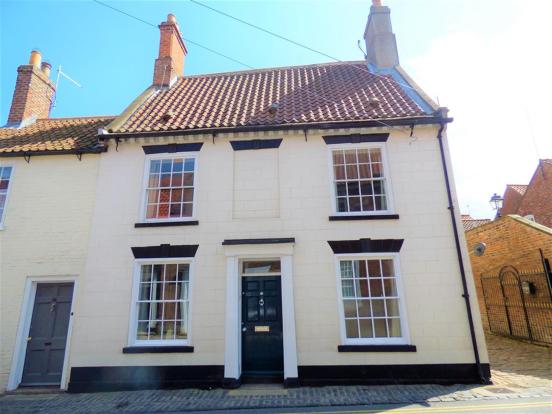
I have spent a good few hours today poking around in an 18th Century house in the middle of town.
It is currently in a bit of a sorry state but soon to be sympathetically renovated and refurbished into a private residence.
It was officially placed on the Statutory Listings in 1969 mainly to preserve it from demolition and clearance rather than it representing a particularly striking or meritorious example of its genre. The description at the time of its first Listing included a rather ominously sounding asbestos roof. This usually indicates a property hastily patched up.
In more recent years the local council took it over, usually through their compulsory purchase powers if an existing owner is either unable or unwilling to maintain it adequately. A dedicated commitment to repair saw a new roof and the positioning of a number of structural tie bars through the external walls to restrain a tendency for an old building to sag and try to fall down.
Original features were retained amongst them sash cord operated window frames, the portico, fanlight and heavy panelled door spilling out directly onto a narrow and busy town street, ornate wrought iron brackets supporting authentic timber gutters, corbelled and dentillated coursing behind and the huge and multi-potted chimney stacks.
The frontage has a thick stucco render coating which when new and fresh will have been quite painful to the eyes in bright summer light but is now a bit drab, discoloured and when tapped with bare knuckles only just hanging on to the brickwork underneath. A render finish can be a applied on a voluntary basis, a bit like the decision in the 1970's to stone clad a modern house but more likely to be enforced to cloak and conceal eroded, pitted, weathered and unsightly brickwork.
The property is double fronted and the windows are arranged with symmetry but only because of a filled middle panel. This could be reflective of an attempt to avoid window tax in the early years after its Georgian emergence or a later money saving measure if an old window fell into disrepair or into the street.

The sash windows are multi-paned with sixteen small panels made up of hand floated glass of unbelievable fragility. In a certain light there is a distortion to the viewed image from small, sealed and permanent air bubbles. Other panes are cracked, fractured or have slipped from the linseed oil putty bed leaving large draughty gaps.
The long side wall onto a cobbled lane is rendered and unpainted which accentuates the wide range of cracks, fissures and flaws. A few windows openings have been bricked up and others have a noticeable sag as the concealed lintels, usually rough hewn beams if at all, have softened from age, rot , decay and woodworm.
The house forms part of a tight group from the same era. The side lane leads to the house and stable-block or a former dairyman, also currently in need of renovation. This links into the old property above a foot passage way ducking under the vaulted underside of a chimney stack.
The back of the house is persistently damp from centuries of being shadowed from warming sunlight. At some time during its ownership the council converted the house into two self contained flats with access to the upper floor from a very corroded and unstable looking metal fire escape.
Inside a few character features survive. Covings, once sharp and defined are dulled from successive paint layers or past leaks. The window recesses show off the substantial solid thickness of the old walls and are flanked by moulded panelling now fixed in place but formerly forming part of a hinged opening shuttering.
Floorboards have been removed through the ground floor in favour of a durable solid floor but unfortunately overlaid in a modern Marley tile known to contain that wonder material asbestos. The original staircase is crudely walled up and enclosed but appears capable of restoration. First floors are a mixture of old pitch pine boards, as wide as ships planking, modern tongued and grooved and sheets of ply and chipboard.
Two flats mean a duplication of facilities and it takes a bit of imagination to work out a viable return to a single dwelling. A surprise is the attic. At one time a large room for servants it has, following re-roofing been fully enclosed as any dormers of glass tiles have been lost. It would make a good room if only daylight could reach its farthest corners.
By now I am covered in a fine film of dust and cobwebs, I have a black sooty streak across my face where I have scratched my nose in a thinking moment , scuffed shoes and filthy hands but I have that feeling of satisfaction and contentment that comes with an interesting job.
As a bit of a postscript the family that had commissioned my inspection did go ahead and buy it. That was in 2014 after purchasing at £70000. After some very hard work and not a little bit of investment the house sold in the last 6 months for £297500.
Monday, 16 March 2020
30 years of Pop
In one of those idle moments in my life, and we all do have them inspite of feeling under pressure and strain from modern life and all that it throws at us, I found myself messing about with the tuning of the digital radio stations on the entertainment centre in the car.
Surfing channels is a doddle on a DAB system and a massive improvement from when, in my teenage years, I had use of a very old valve radiogram where the dial had to be slowly rotated in order to catch the likes of Radio Moscow, Luxembourg and Caroline. Of course the set had to be switched off after an hour as it overheated and smelt a bit smoky.
To my absolute delight I found, stacked up on each other on the DAB listings three commercial frequencies broadcasting music from, without fear of contradiction, the best three decades ever of pop and rock music from the 1970's, the 80's and 90's.
The fact that they are from the last century is difficult for me to process especially as I am now in my 6th decade.
Although I mentioned a period of idleness that is not to say that I was not restless and with a very low concentration level on anything. So, naturally I just flitted back and forth, in sequence from the earliest to the most recent over the thirty years to sample the great tunes and artists on offer.
This was a reasonably seamless operation apart from those interminable interruptions brought about by inane and banal adverts for national brands and services.
So I thought it would be interesting and fun to compile a sample of the simultaneous trio of songs over an hour or so and then offer a bit of a commentary to explain which of each three got my vote.
This follows no set criteria but was largely based on the return of the strange familiarity that arose from when I will have heard the tunes for the first time back in the day... in that 20th Century.
Why not have a go yourself as I expect some considerable variation in choices dependant on how old you are, where you grew up and listened to the tracks or had rites of passage in your lives where one or more of the songs formed the soundtrack.
Here goes.
Set 1;
1970's - Sister Sledge with Lost in Music.
80's- Ingram and MacDonald- Ya mo be there
90's- Roxette-It must have been love
Straight in at the deep end with this lot, all of great merit and classy vocals and lyrics but for sheer harmony and rock-quality it goes to Roxette.
Set 2:
1970's- James Brown- Get on up
80's- Chrissie Hynde and UB40- I got you babe
90's- Bryan Adams and Mel C- When you're gone
Where do I start to judge these? Soulful, laid back and rockin' but my teenage years were to the sounds of Hynde and reggae.
Set 3;
1970's- Rose Royce- wishing on a star
80's- The Human League- Don't you want me baby
90's- Wilson Phillips- Hold On
I was at University and the electropop League album Dare was on permanently just about everywhere but my vote must go to the wonderful Rose Royce
Set 4;
1970's- Chic- Dance, Dance, Dance
80's- Prince- Kiss
90's- Shola Ama- You might need somebody
I can't actually stand Prince and the 90's song is most lilting but I went to my first proper disco in the 70's and Chic helped me to strut my stuff on the dancefloor, however awkward that looked.
Set 5;
1970's- Natalie Cole- This will be
80's- INXS- need you tonight
90's- Charles and Eddie- Would I lie to you
I think Natalie was a decade out of date. I was never into INXS but a recent Hutchence documentary was really interesting and his early death a tragedy. However, for sheer harmony and rhythm the winners are from the 1990's
Set 6:
1970's- The Isley Brothers- That body
80's- Cheryl Lynn- Got to be real
90's- Whitney Houston- I'm every woman
My radio must have broken down at the time of these releases. Whitney can have it.
Set 7:
1970's- Smokey Robinson- Tears of a Clown
80's- Curiosity killed the Cat- Misfit
90's- Heart- All I want to do
I have to give all three the top vote as they are mega-hits-all of them
Set 8;
1970's- Curtis Mayfield- Move on Up
80's- Mai Tai- History
90's- Alannah Myles- Black Velvet
Some big hitters here but for sultry tones my vote goes to Black Velvet.
Set 9:
1970's- Heatwave- Boogie Nights
80's- Dire Straits- Money for Nothing
90's- Britney Spears- Born to make you happy
I'll pass on Britney as although talented there was a big hype. Dire Straits and MTV were inseparable but Boogie Nights got my feet tapping
Set 10;
1970's- Diana Ross- Ain't no Mountain High enough
80's- Abba- Super Trooper
90's- George Michael and Elton John- Don't let the sun go down
Crikey. I'll sit on the fence and put all three of these in the top spot
Set 11;
1970's - Barry Manilow- I write the songs
80's- Amii Stewart- Friends
90's - Sixpence none the Richer- kiss me
Manilow is a legend, Amii a bit of an unknown to me and Sixpence is harmonious bliss
Set 12;
1970's- Dire Straits- Sultans of Swing
80's- Mr Mister- Broken wings
90's- Maxi Priest- Close to you
One of the first albums I ever bought featured Sultans of Swing and so that gets my vote. The others are a very close joint second
Let me now what you voted for.
Surfing channels is a doddle on a DAB system and a massive improvement from when, in my teenage years, I had use of a very old valve radiogram where the dial had to be slowly rotated in order to catch the likes of Radio Moscow, Luxembourg and Caroline. Of course the set had to be switched off after an hour as it overheated and smelt a bit smoky.
To my absolute delight I found, stacked up on each other on the DAB listings three commercial frequencies broadcasting music from, without fear of contradiction, the best three decades ever of pop and rock music from the 1970's, the 80's and 90's.
The fact that they are from the last century is difficult for me to process especially as I am now in my 6th decade.
Although I mentioned a period of idleness that is not to say that I was not restless and with a very low concentration level on anything. So, naturally I just flitted back and forth, in sequence from the earliest to the most recent over the thirty years to sample the great tunes and artists on offer.
This was a reasonably seamless operation apart from those interminable interruptions brought about by inane and banal adverts for national brands and services.
So I thought it would be interesting and fun to compile a sample of the simultaneous trio of songs over an hour or so and then offer a bit of a commentary to explain which of each three got my vote.
This follows no set criteria but was largely based on the return of the strange familiarity that arose from when I will have heard the tunes for the first time back in the day... in that 20th Century.
Why not have a go yourself as I expect some considerable variation in choices dependant on how old you are, where you grew up and listened to the tracks or had rites of passage in your lives where one or more of the songs formed the soundtrack.
Here goes.
Set 1;
1970's - Sister Sledge with Lost in Music.
80's- Ingram and MacDonald- Ya mo be there
90's- Roxette-It must have been love
Straight in at the deep end with this lot, all of great merit and classy vocals and lyrics but for sheer harmony and rock-quality it goes to Roxette.
Set 2:
1970's- James Brown- Get on up
80's- Chrissie Hynde and UB40- I got you babe
90's- Bryan Adams and Mel C- When you're gone
Where do I start to judge these? Soulful, laid back and rockin' but my teenage years were to the sounds of Hynde and reggae.
Set 3;
1970's- Rose Royce- wishing on a star
80's- The Human League- Don't you want me baby
90's- Wilson Phillips- Hold On
I was at University and the electropop League album Dare was on permanently just about everywhere but my vote must go to the wonderful Rose Royce
Set 4;
1970's- Chic- Dance, Dance, Dance
80's- Prince- Kiss
90's- Shola Ama- You might need somebody
I can't actually stand Prince and the 90's song is most lilting but I went to my first proper disco in the 70's and Chic helped me to strut my stuff on the dancefloor, however awkward that looked.
Set 5;
1970's- Natalie Cole- This will be
80's- INXS- need you tonight
90's- Charles and Eddie- Would I lie to you
I think Natalie was a decade out of date. I was never into INXS but a recent Hutchence documentary was really interesting and his early death a tragedy. However, for sheer harmony and rhythm the winners are from the 1990's
Set 6:
1970's- The Isley Brothers- That body
80's- Cheryl Lynn- Got to be real
90's- Whitney Houston- I'm every woman
My radio must have broken down at the time of these releases. Whitney can have it.
Set 7:
1970's- Smokey Robinson- Tears of a Clown
80's- Curiosity killed the Cat- Misfit
90's- Heart- All I want to do
I have to give all three the top vote as they are mega-hits-all of them
Set 8;
1970's- Curtis Mayfield- Move on Up
80's- Mai Tai- History
90's- Alannah Myles- Black Velvet
Some big hitters here but for sultry tones my vote goes to Black Velvet.
Set 9:
1970's- Heatwave- Boogie Nights
80's- Dire Straits- Money for Nothing
90's- Britney Spears- Born to make you happy
I'll pass on Britney as although talented there was a big hype. Dire Straits and MTV were inseparable but Boogie Nights got my feet tapping
Set 10;
1970's- Diana Ross- Ain't no Mountain High enough
80's- Abba- Super Trooper
90's- George Michael and Elton John- Don't let the sun go down
Crikey. I'll sit on the fence and put all three of these in the top spot
Set 11;
1970's - Barry Manilow- I write the songs
80's- Amii Stewart- Friends
90's - Sixpence none the Richer- kiss me
Manilow is a legend, Amii a bit of an unknown to me and Sixpence is harmonious bliss
Set 12;
1970's- Dire Straits- Sultans of Swing
80's- Mr Mister- Broken wings
90's- Maxi Priest- Close to you
One of the first albums I ever bought featured Sultans of Swing and so that gets my vote. The others are a very close joint second
Let me now what you voted for.
Saturday, 14 March 2020
Powerplant
I have recently bought a houseplant for each of the work stations in my business office.
Those I work with did view this with a bit of suspicion at first. A few anxious glances were passed across the room as though I was imposing a sort of test as in "keep the plant alive and you'll keep your job" but of course that is wrong in so many ways in terms of employment law and common decency.
To date only one of the plants has died which is quite surprising as the rental agreement for our 800 square foot space is all inclusive where heat and light is concerned and as a consequence the room can be very stiflingly overheated. Often as not a window has to be cracked open which can be problematic in that we are on a major river estuary and the prevailing winds can be quite storm force leading to rapid cooling.
I think that the demised fern like species was already a bit poorly anyway. The rest of the potted greenery is thriving and indeed on some of the desks the new shoots and colourful leaves are prolifically abundant.
My own plant did have an outbreak of leaf fungus but after a bit of a chat and foliage massage on the rare occasion of my attendance in the office it has recovered with a healthy sheen on all of its growths.
This situation of a peaceful and harmonic co-existence has done a lot to cure my deep rooted fear of vegetation as in my childhood and formative years I was terrorised by the natural world.
Let me explain.
In my first decade of my life the family home was at the end of a cul de sac on a housing estate and with open fields on two sides. The sight of the glaring eyes of a fox when caught by the house lights as it came into the garden was frightening and menacing.
In my teens the next house move was to another residential estate backing onto agricultural land and with a huge Elm tree nestled in the rear boundary onto the farmer's headland. My bedroom was at the back of the house and even in the lightest of wind conditions the sites and sounds of the canopy in full leaf cover was terrifying, especially in the depths of a dark night when I would often be awoken by creaking and groaning of the boughs.
The onset of the Dutch Elm Disease brought on a new and even more scary element in that the dying branches would just fall off in a noisy heap in the garden.
The risk to us children meant that the tree had to be progressively cut back and was eventually just a fungus supporting stump of a trunk.
So the new found synergy with my desk top plant has helped me to process those bad experiences from my past.
Things now seem to be going full circle as I have just been reading about a new botanical study that shows that the low levels of energy produced by plants could be harnessed for a range of uses.
It appears that plants naturally deposit bio-matter as a waste product as they grow which in turn feeds the natural bacteria in the soil creating energy.
Here is a bit more of the science about that.
In sunlight and also conditions of shade plants produce sugars and oxygen from water and carbon dioxide through photosynthesis.
The sugars are transported through to the stem and roots.
Some of this is excreted into the soil.
The micro-organisms in the soil break this down further releasing energy.
If this can then be collected in fuel cells then it could be used as a source of power. Most man made power sources such as batteries and solar panels have limitations so that they cannot be relied upon for sustained power for example in remote or inhospitable environments.
A single fuel cell can generate 0.1 milliwatts of power. and if a series of such cells are connected up then the delivery of energy can be more manageable and effective.
As a practical demonstration of the possibilities of plant power a four year study at the Zoological Society of London culminated in a Maidenhair Fern by the name of Pete producing enough energy to take a Selfie Photograph every 20 seconds.
That does sound like a long and arduous study but the results have excited the world of plant science about further practical applications.
I will just have to keep friends with my one desktop plant and perhaps one day it could be running all of the powered systems in the office.... and beyond.
Friday, 13 March 2020
Empty Shelves
There have been shortages before.
Hubert and Gladys were babies in the rationing years of the second world war. It was the lack of natural vitamins and nutrients in the subsistence diet of a nation under blockade by the warships and U-Boats of the Nazis that gave them both such a poor start to their early lives.
Natural development and an ability to thrive were consequences of meagre goodness in dried foodstuffs, the absence of any fruit, ugly vegetables and small cuts of red meat.
Hubert was of below average height for his age, not helped by his ricket induced bowed legs and with a pale demeanour to his drawn facial features. Gladys retained a boyish physique well into her later teens and struggled keep her own hair and teeth.
Everyone remarked, when they stepped out together, that they made a beautiful couple.
In their first married years the rationing continued even though the Government promised that better and not austere days were just around the corner, although on a winding road of recovery they did not, understandably specify what corner they were talking about.
It was a case of having to live with one or other of their families whilst on the waiting list for their own home, albeit confined to a council house of which there was a shortage following the destruction of a good proportion of residences in the blitz.
Work was also in short supply. Hubert was not afraid of grafting and took on a number of labouring and menial jobs to make a contribution to their lodgings and to try to save towards a deposit on a rental or ideally an actual owned property. Gladys took in laundry and without Hubert's knowledge often did cleaning and even a bit of child minding. She was determined to pay her share in their marriage.
In the post war years the economy of the UK did start to recover sufficiently to attain full employment. House building started to catch up with demand (although it never would) and at long last the couple took up occupation of a brand new local authority built two storey and three bedroomed semi detached on a large estate on the then periphery of the town.
Aspirations of furnishing the place and buying a car took some discipline in scrimping and saving. They were of the generation who regarded getting into debt, any debt,as shameful and defeatist. They would do without if they could not buy outright.
The arrival of three children, almost in successive years, brought about other shortages but of a manageable type mainly revolving around living space, the domestic budget and opportunties for holidays and treats.
Hubert was, by the late 1950's and early 60's, employed in the offices of a large industrial concern validating the orders for major contracts in the home nation and through exporting to the dependant countries of the Commonwealth. It was a "jobs for life" expectation giving good working conditions and a salary allowing Gladys to keep home and hearth together.
The children fluorished in the stable environment and wanted for nothing although of course Mum and Dad made the necessary sacrifices to make this possible. School uniforms and meals took their share of the monthly income but it was do-able and a small amount could be put aside for that rainy day after the usual outgoings.
In the 1960's and 70's Hubert was prudent in making sure that his pension was supplemented but he was still able to move the family to their own house in that decade, a larger 4 bed semi in a leafy suburban part of town.
The UK economy, from a resurgence in the post war era was by the mid to late 70's amongst the worst in Europe through a combination of poor state management, labour disputes, a weak currency in world markets and full recovery of the industrial base of the likes of Germany and Japan. The shortages in power supplies in the UK enforced a three day working week and the panic buying of candles. The upheaval of the winter of discontent and austerity measures were generally tolerable to those who had made preparations in advance. Hubert and Gladys enjoyed what was otherwise a dire set of circumstances affecting the nation.
He rose steadily through the ranks of the office and was able to retire by the late 1980's on a good settlement which would see the couple in relative comfort for their later years.
There were some worries in their minds from the threat of a Third World War at that time but they had, after all, lived through conflict before and felt that they could cope with what was required of them in the "Protect and Survive" booklet.
The 1990's and into the 21st century saw the couple leading an active retirement being involved in many local activities and firmly committed to giving back to society some of the material wealth and knowledge that they had been blessed to receive.
Hubert ferried hospital patients to and fro in his own car and Gladys helped out at the soup kitchen and Foodbank. There was regular charitable giving to overseas and home grown relief projects.
Their life was comfortable and they felt that they were entitled to some time to themselves between humanitarian and compassionate acts.
Their little luxury was a hard earned sit down and a cup of tea during which they could reminisce and talk about the children, now all grown up and with their own families.
Hubert found himself staring down the barrel one morning with the realisation that there was a distinct shortage of his favourite biscuits, Custard Creams and Bourbons at the bottom of it.
Gladys was anxious at hearing Hubert;s indignant outburst, fearing some medical complaint or observation of something in the news columns. She was well aware of the biscuit crisis affecting the country but was prepared to attribute the absence of the cream filled treats to an oversight on her part in the last weekly shop in order to protect the sensibilities of her husband.
He must have seen about the mayhem and disruption wreaked by a named storm front on the production facilities of United Biscuits at their Carlisle factory but having worked in a large industry he would have expected supplies to resume at the earliest opportunity.
The flood waters in Carlisle had swamped the factory causing the baking ovens to cease functioning with many weeks required to bring them back into service.
Hubert was by now distraught at the lack of biscuits to go with his tea.
He ranted and raved after seeing the magnitude of the crisis on an internet search.
Gladys did not have to contemplate taking one for the team after all. He did not fight a world war, he admitted that, to be starved of his favourite bakes nor had he lived through years of austerity and shortages to be faced with this feeble indictment of UK manufacturing and disaster planning.
The last straw, to his mind, was the media coverage given to the arrival of two huge Boeing Cargo Planes into Doncaster Airport from the Emirates with an airlift of biscuits intended to appease the UK population.
He turned to express his feelings to Gladys but such was her love and admiration for her husband that she was already reversing the car down the drive to get in what could be a long and expectant queue at the local Tesco supermarket.
Hubert and Gladys were babies in the rationing years of the second world war. It was the lack of natural vitamins and nutrients in the subsistence diet of a nation under blockade by the warships and U-Boats of the Nazis that gave them both such a poor start to their early lives.
Natural development and an ability to thrive were consequences of meagre goodness in dried foodstuffs, the absence of any fruit, ugly vegetables and small cuts of red meat.
Hubert was of below average height for his age, not helped by his ricket induced bowed legs and with a pale demeanour to his drawn facial features. Gladys retained a boyish physique well into her later teens and struggled keep her own hair and teeth.
Everyone remarked, when they stepped out together, that they made a beautiful couple.
In their first married years the rationing continued even though the Government promised that better and not austere days were just around the corner, although on a winding road of recovery they did not, understandably specify what corner they were talking about.
It was a case of having to live with one or other of their families whilst on the waiting list for their own home, albeit confined to a council house of which there was a shortage following the destruction of a good proportion of residences in the blitz.
Work was also in short supply. Hubert was not afraid of grafting and took on a number of labouring and menial jobs to make a contribution to their lodgings and to try to save towards a deposit on a rental or ideally an actual owned property. Gladys took in laundry and without Hubert's knowledge often did cleaning and even a bit of child minding. She was determined to pay her share in their marriage.
In the post war years the economy of the UK did start to recover sufficiently to attain full employment. House building started to catch up with demand (although it never would) and at long last the couple took up occupation of a brand new local authority built two storey and three bedroomed semi detached on a large estate on the then periphery of the town.
Aspirations of furnishing the place and buying a car took some discipline in scrimping and saving. They were of the generation who regarded getting into debt, any debt,as shameful and defeatist. They would do without if they could not buy outright.
The arrival of three children, almost in successive years, brought about other shortages but of a manageable type mainly revolving around living space, the domestic budget and opportunties for holidays and treats.
Hubert was, by the late 1950's and early 60's, employed in the offices of a large industrial concern validating the orders for major contracts in the home nation and through exporting to the dependant countries of the Commonwealth. It was a "jobs for life" expectation giving good working conditions and a salary allowing Gladys to keep home and hearth together.
The children fluorished in the stable environment and wanted for nothing although of course Mum and Dad made the necessary sacrifices to make this possible. School uniforms and meals took their share of the monthly income but it was do-able and a small amount could be put aside for that rainy day after the usual outgoings.
In the 1960's and 70's Hubert was prudent in making sure that his pension was supplemented but he was still able to move the family to their own house in that decade, a larger 4 bed semi in a leafy suburban part of town.
The UK economy, from a resurgence in the post war era was by the mid to late 70's amongst the worst in Europe through a combination of poor state management, labour disputes, a weak currency in world markets and full recovery of the industrial base of the likes of Germany and Japan. The shortages in power supplies in the UK enforced a three day working week and the panic buying of candles. The upheaval of the winter of discontent and austerity measures were generally tolerable to those who had made preparations in advance. Hubert and Gladys enjoyed what was otherwise a dire set of circumstances affecting the nation.
He rose steadily through the ranks of the office and was able to retire by the late 1980's on a good settlement which would see the couple in relative comfort for their later years.
There were some worries in their minds from the threat of a Third World War at that time but they had, after all, lived through conflict before and felt that they could cope with what was required of them in the "Protect and Survive" booklet.
The 1990's and into the 21st century saw the couple leading an active retirement being involved in many local activities and firmly committed to giving back to society some of the material wealth and knowledge that they had been blessed to receive.
Hubert ferried hospital patients to and fro in his own car and Gladys helped out at the soup kitchen and Foodbank. There was regular charitable giving to overseas and home grown relief projects.
Their life was comfortable and they felt that they were entitled to some time to themselves between humanitarian and compassionate acts.
Their little luxury was a hard earned sit down and a cup of tea during which they could reminisce and talk about the children, now all grown up and with their own families.
Hubert found himself staring down the barrel one morning with the realisation that there was a distinct shortage of his favourite biscuits, Custard Creams and Bourbons at the bottom of it.
Gladys was anxious at hearing Hubert;s indignant outburst, fearing some medical complaint or observation of something in the news columns. She was well aware of the biscuit crisis affecting the country but was prepared to attribute the absence of the cream filled treats to an oversight on her part in the last weekly shop in order to protect the sensibilities of her husband.
He must have seen about the mayhem and disruption wreaked by a named storm front on the production facilities of United Biscuits at their Carlisle factory but having worked in a large industry he would have expected supplies to resume at the earliest opportunity.
The flood waters in Carlisle had swamped the factory causing the baking ovens to cease functioning with many weeks required to bring them back into service.
Hubert was by now distraught at the lack of biscuits to go with his tea.
He ranted and raved after seeing the magnitude of the crisis on an internet search.
Gladys did not have to contemplate taking one for the team after all. He did not fight a world war, he admitted that, to be starved of his favourite bakes nor had he lived through years of austerity and shortages to be faced with this feeble indictment of UK manufacturing and disaster planning.
The last straw, to his mind, was the media coverage given to the arrival of two huge Boeing Cargo Planes into Doncaster Airport from the Emirates with an airlift of biscuits intended to appease the UK population.
He turned to express his feelings to Gladys but such was her love and admiration for her husband that she was already reversing the car down the drive to get in what could be a long and expectant queue at the local Tesco supermarket.
Wednesday, 11 March 2020
The Velvet Underground
Like me, many of you will have experienced the strange mix of excitement and dread when preparing to ask a question.
This is usually in a formal Q and A session in a meeting or when invited to test the knowledge of an Expert or Specialist. The fear is based on 1) The question was just asked by someone else 2) The question is nothing to do with the subject 3) Everyone will think you're an ignoramus 4) You actually answer your own question in asking it in a tortured sort of way.
I found myself in just that situation recently whilst on a guided tour of the formal gardens and wider grounds of a large Historic House Hotel. I am not in any way a gardener, especially so in our current family home where outside areas are loose dressed or brick paved which means the only real opportunity to grow anything is in a ceramic pot.
The event is a regular one at the venue and I was with a large contingent of around fifty persons who, after being split into two smaller and more manageable groups were allocated one of the full time staff whose role for the ensuing couple of hours was to point out and explain the flora and fauna and give an insight into what their job entailed.
The asking of questions during the walk was encouraged and those in the party who were evidently seasoned and knowledgeable in all things horticultural took the opportunity to expand their own ideas or throw a few at the Head Gardener to find out about new strains of plants and the latest science being practiced by the professionals.
I just skulked about at the rear of the group so as not to draw attention to my ignorance and lack of green fingers. That is not to say that I was not fascinated by the descriptions of individual species.
The meticulously kept lawns were of the brightest green I had ever seen. This was not through a reliance on chemicals but physical exertions of scarifying in the winter months, careful cutting and the prudent application of an iron based dressing. As the names of individual plants were reeled off by the staff I used the cover of the group to activate an App in my mobile phone which, after the taking of a close-up photo, was able to identify it. This confirmed that indeed the Gardeners really knew their stuff and scored 100%.
It was about half way round the ornamental gardens that I started to feel the anxiety that I always do when a question pops into my mind. The catalyst for the urge was from my stumbling into a round mound of soft, excavated soil that even I could identify as a Mole Hill. I think I got away with it without drawing attention to my instability. This was mightily ironic in that I was one of youngest on the tour but the least sure footed.
I began to formulate a question on the subject of Moles. Surely some of the keen amateur gardeners would feel similarly disposed. I listened intently for this as it would allow me to relax and enjoy the sights, sounds and springtime smells around us. All manners of enquiries were made about feeding roses, pruning fruit trees, encouraging bees and composting but the subject of Moles was not mentioned.
I was not brave enough to catch the attention of our host to broach the subject. A few drops of rain heralded the end of the outside part of the tour and we made our way into the historic house to shelter and get warm. It was only on collecting my jacket from the cloakroom that I found the courage to ask that pressing question.
It appears that the Mole is the sworn enemy of the Groundsman and they are ruthlessly trapped and disposed of. I found that quite distressing so it was probably for the best that I found out about it later rather than sooner.
This is usually in a formal Q and A session in a meeting or when invited to test the knowledge of an Expert or Specialist. The fear is based on 1) The question was just asked by someone else 2) The question is nothing to do with the subject 3) Everyone will think you're an ignoramus 4) You actually answer your own question in asking it in a tortured sort of way.
I found myself in just that situation recently whilst on a guided tour of the formal gardens and wider grounds of a large Historic House Hotel. I am not in any way a gardener, especially so in our current family home where outside areas are loose dressed or brick paved which means the only real opportunity to grow anything is in a ceramic pot.
The event is a regular one at the venue and I was with a large contingent of around fifty persons who, after being split into two smaller and more manageable groups were allocated one of the full time staff whose role for the ensuing couple of hours was to point out and explain the flora and fauna and give an insight into what their job entailed.
The asking of questions during the walk was encouraged and those in the party who were evidently seasoned and knowledgeable in all things horticultural took the opportunity to expand their own ideas or throw a few at the Head Gardener to find out about new strains of plants and the latest science being practiced by the professionals.
I just skulked about at the rear of the group so as not to draw attention to my ignorance and lack of green fingers. That is not to say that I was not fascinated by the descriptions of individual species.
The meticulously kept lawns were of the brightest green I had ever seen. This was not through a reliance on chemicals but physical exertions of scarifying in the winter months, careful cutting and the prudent application of an iron based dressing. As the names of individual plants were reeled off by the staff I used the cover of the group to activate an App in my mobile phone which, after the taking of a close-up photo, was able to identify it. This confirmed that indeed the Gardeners really knew their stuff and scored 100%.
It was about half way round the ornamental gardens that I started to feel the anxiety that I always do when a question pops into my mind. The catalyst for the urge was from my stumbling into a round mound of soft, excavated soil that even I could identify as a Mole Hill. I think I got away with it without drawing attention to my instability. This was mightily ironic in that I was one of youngest on the tour but the least sure footed.
I began to formulate a question on the subject of Moles. Surely some of the keen amateur gardeners would feel similarly disposed. I listened intently for this as it would allow me to relax and enjoy the sights, sounds and springtime smells around us. All manners of enquiries were made about feeding roses, pruning fruit trees, encouraging bees and composting but the subject of Moles was not mentioned.
I was not brave enough to catch the attention of our host to broach the subject. A few drops of rain heralded the end of the outside part of the tour and we made our way into the historic house to shelter and get warm. It was only on collecting my jacket from the cloakroom that I found the courage to ask that pressing question.
It appears that the Mole is the sworn enemy of the Groundsman and they are ruthlessly trapped and disposed of. I found that quite distressing so it was probably for the best that I found out about it later rather than sooner.
Saturday, 7 March 2020
78 Nails
This is a very clumsy statement but bear with me.
It is, I acknowledge, an adaptation of a popular and urban myth.
Here goes;
"You are never more than 100m away from the single most important object in the global economy".
Any ideas?
Upon hearing this claim a few things immediately throw themselves forward as likely candidates- the credit card, a newspaper, an aluminium drinks can, a discarded wrapper from a McDonalds Restaurant and the motor car.
Well, as I write this I can confirm that I am in close proximity to one of the objects which has attained the aura of a kingpin of commercialism and globalism.
Final guesses?
Nope, well the answer is not that obvious but it is the wooden shipping pallet.
One of the International Standards for the item stipulates that it comprises 11 wooden boards, 9 spacer blocks and 78 fixing nails. This is quite a precise definition for what are very basic components but absolutely necessary for these wooden platforms to carry from 25kg to 1500kg of goods and freight.
There are estimated to be around ten billion in use at any one time.

Their origins are synonymous with the global resurgence and recovery in the post war years although they were around in the 1940's with the increasingly common use of the new machinery of the fork lift truck.
These first pallets could only be lifted from two sides but it was soon the case that a 4 way version was in circulation. There was a rush to the US Patent Office by a number of inventors and entrepreneurs of pallets and their peripheral products who could see the vast potential of the unit load transport sector.
In Northern Europe in the 1950's the railways adopted the use of fork lifts and the palletisation of freight followed.
The first European Pallets were 800mm x 1200mm (in imperial measurements roughly 31.5 inches by 47.24 inches) but this did cause a problem. There was a bit of a clash in pallet sizing with those from the North American market where the standard was 1016mm (40 inches) by 1219mm (48 inches).
The use of shipping containers was an American innovation at the industry recognised size of 40 feet and so an exact number of twelve US pallets could be accommodated.
However, at the new European size and with the 40 foot container in common use there was a wastage of capacity in every single trip. As with most global trade issues any discussions of achieving a global standard for the pallet fell into the hands of committees and special interest groups.
After various moves in the 1960's, 1970's and through to the 1990's it was not until 2003 that an International Standard (ISO) was agreed but even this meant the approval of six different pallet sizes.
The pallet just in my garage is not an officially stamped one. It will have been cobbled together by a timber yard or by an apprentice in a transport depot. This continues to be the trend beyond the main and Corporate providers as the size and quality is ultimately influenced by trading networks, cultural influences and economic considerations.
There has always been a good trade in the pallets themselves. I recall seeing motorway hoardings in the UK appealing for second hand pallets for cash.
I live in a very busy Port Town and I am often stuck behind lorries stacked high with the things going to and from the Docks.
Even after a rough,tough and likely short period of usefulness the components of a typical pallet have found a bit of an artistic role with reincarnation as furniture and upcycled items which are to be found on Pinterest and other hobbyist type portals.

I was quite surprised at the rather interesting origins and life of the humble pallet.
My thanks for the introduction to the subject go to Liam Shaw whose talk on Pallets on "The Boring Talks" Podcast first broadcast in February 2018 caught my attention.
It is, I acknowledge, an adaptation of a popular and urban myth.
Here goes;
"You are never more than 100m away from the single most important object in the global economy".
Any ideas?
Upon hearing this claim a few things immediately throw themselves forward as likely candidates- the credit card, a newspaper, an aluminium drinks can, a discarded wrapper from a McDonalds Restaurant and the motor car.
Well, as I write this I can confirm that I am in close proximity to one of the objects which has attained the aura of a kingpin of commercialism and globalism.
Final guesses?
Nope, well the answer is not that obvious but it is the wooden shipping pallet.
One of the International Standards for the item stipulates that it comprises 11 wooden boards, 9 spacer blocks and 78 fixing nails. This is quite a precise definition for what are very basic components but absolutely necessary for these wooden platforms to carry from 25kg to 1500kg of goods and freight.
There are estimated to be around ten billion in use at any one time.

Their origins are synonymous with the global resurgence and recovery in the post war years although they were around in the 1940's with the increasingly common use of the new machinery of the fork lift truck.
These first pallets could only be lifted from two sides but it was soon the case that a 4 way version was in circulation. There was a rush to the US Patent Office by a number of inventors and entrepreneurs of pallets and their peripheral products who could see the vast potential of the unit load transport sector.
In Northern Europe in the 1950's the railways adopted the use of fork lifts and the palletisation of freight followed.
The first European Pallets were 800mm x 1200mm (in imperial measurements roughly 31.5 inches by 47.24 inches) but this did cause a problem. There was a bit of a clash in pallet sizing with those from the North American market where the standard was 1016mm (40 inches) by 1219mm (48 inches).
The use of shipping containers was an American innovation at the industry recognised size of 40 feet and so an exact number of twelve US pallets could be accommodated.
However, at the new European size and with the 40 foot container in common use there was a wastage of capacity in every single trip. As with most global trade issues any discussions of achieving a global standard for the pallet fell into the hands of committees and special interest groups.
After various moves in the 1960's, 1970's and through to the 1990's it was not until 2003 that an International Standard (ISO) was agreed but even this meant the approval of six different pallet sizes.
The pallet just in my garage is not an officially stamped one. It will have been cobbled together by a timber yard or by an apprentice in a transport depot. This continues to be the trend beyond the main and Corporate providers as the size and quality is ultimately influenced by trading networks, cultural influences and economic considerations.
There has always been a good trade in the pallets themselves. I recall seeing motorway hoardings in the UK appealing for second hand pallets for cash.
I live in a very busy Port Town and I am often stuck behind lorries stacked high with the things going to and from the Docks.
Even after a rough,tough and likely short period of usefulness the components of a typical pallet have found a bit of an artistic role with reincarnation as furniture and upcycled items which are to be found on Pinterest and other hobbyist type portals.

I was quite surprised at the rather interesting origins and life of the humble pallet.
My thanks for the introduction to the subject go to Liam Shaw whose talk on Pallets on "The Boring Talks" Podcast first broadcast in February 2018 caught my attention.
Subscribe to:
Posts (Atom)